Picture this: it’s a scorching summer day in Corona, California, and you’re dreaming of diving into your backyard oasis. But instead of crystal-clear water, you’re staring at a murky, algae-covered mess that looks more like a swamp than a swimming pool. If this scenario sounds familiar, you’re not alone. Maintaining a pristine pool in Corona’s unique climate requires expertise, consistency, and the right approach to pool service.
With temperatures soaring above 100°F during the summer months and the constant battle against debris from Santa Ana winds, Corona homeowners face unique pool maintenance challenges. Whether you’re a new pool owner or struggling with recurring water quality issues, understanding professional pool service options can transform your backyard from a maintenance headache into the relaxing retreat you envisioned.
Key Takeaways
• Professional pool service in Corona addresses unique local challenges, including extreme heat, wind debris, and hard water conditions • Regular maintenance schedules prevent costly repairs and ensure safe, healthy swimming conditions year-round • Water chemistry expertise is crucial for Corona pools due to local water quality and climate factors • Comprehensive service packages offer better value than piecemeal maintenance approaches • Local expertise matters – Corona-specific knowledge makes a significant difference in service quality
Understanding Pool Service in Corona: More Than Just Cleaning
The Corona Climate Challenge
Corona’s Mediterranean climate presents unique challenges for pool maintenance that generic service providers often overlook. Our city experiences dramatic temperature swings, from cool winter mornings to blazing summer afternoons that can reach 110°F. These conditions accelerate chemical consumption and create ideal conditions for algae and bacteria to thrive.
Local Environmental Factors Include:
Santa Ana winds are bringing debris and dust
High mineral content in the local water supply
Intense UV exposure breaks down chlorine faster
Temperature fluctuations affect chemical balance
Seasonal pollen from local vegetation
Professional Pool Service in Corona providers understand these challenges and adjust their maintenance protocols accordingly. They know that what works in coastal areas won’t necessarily work in our inland valley climate.
Beyond Basic Skimming: Comprehensive Service Components
Modern pool service encompasses far more than the traditional “skim and go” approach. Today’s professional services include:
🔬 Advanced Water Testing
Professional technicians test for 10+ chemical parameters, not just chlorine and pH. This includes total alkalinity, calcium hardness, cyanuric acid levels, and phosphates – all crucial for Corona’s water conditions.
⚙️ Equipment Optimization Regular inspection and maintenance of pumps, filters, heaters, and automation systems ensures optimal performance and energy efficiency. In Corona’s climate, equipment works harder and requires more frequent attention.
🧪 Precision Chemical Management
Proper chemical balancing requires understanding how Corona’s environmental conditions affect water chemistry. Professional services use commercial-grade chemicals and precise dosing to maintain perfect balance.
When searching for reliable pool services, it’s essential to choose providers who understand these comprehensive service requirements rather than basic cleaning companies.
Comprehensive Pool Maintenance Services Available in Corona
Weekly Service Programs: The Foundation of Pool Health
Standard Weekly Service Includes:
Surface skimming and debris removal
Brushing walls, steps, and tile lines
Vacuuming the pool floor and hard-to-reach areas
Emptying skimmer and pump baskets
Water testing and chemical adjustment
Equipment inspection and basic maintenance
Premium Weekly Service Adds:
Advanced water chemistry analysis
Filter cleaning rotation
Equipment performance optimization
Detailed maintenance logs
Photo documentation of service visits
Priority emergency response
Seasonal Pool Services for Corona’s Climate
🌞 Summer Intensive Programs
During Corona’s brutal summer months (June through September), pools require enhanced attention:
Increased service frequency (bi-weekly or weekly)
Enhanced algae prevention protocols
UV stabilizer management for intense sun exposure
Increased circulation recommendations
Heat-related equipment monitoring
🍂 Winter Maintenance Programs
Even Corona’s mild winters require specific attention:
Reduced chemical requirements but continued monitoring
Equipment winterization for occasional freezing
Debris management during the rainy season
Preventive maintenance scheduling
For detailed guidance on seasonal transitions, check out our pool closing tips to ensure your pool survives Corona’s occasional cold snaps.
Emergency and Restoration Services
Green Pool Recovery
Corona’s climate can turn a clear pool green within days. Professional restoration services include:
Initial Assessment – Determining contamination level and causes
Shock Treatment – High-dose chlorination to kill algae and bacteria
Filtration Enhancement – Extended run times and filter cleaning
Chemical Rebalancing – Restoring proper water chemistry
Ongoing Monitoring – Ensuring complete recovery
Equipment Repair and Replacement
Pump and motor service – Critical in Corona’s demanding climate
Filter system upgrades – Improving efficiency and reducing maintenance
Heater maintenance – Essential for year-round swimming
Water Chemistry Excellence: The Science Behind Crystal Clear Water
Understanding Corona’s Water Challenges
Corona’s municipal water supply has a higher mineral content than coastal areas, which affects pool chemistry management. Professional Pool Service in Corona providers must account for:
Calcium Hardness Management
Local water typically ranges 200 to 400 ppm of calcium
Requires regular monitoring to prevent scaling
May need water dilution or specialized treatments
pH Stability Issues
High alkalinity in local water affects pH stability
Requires buffering agents and careful monitoring
Professional adjustment prevents equipment damage
The Perfect Chemical Balance Formula
Parameter
Ideal Range
Corona Considerations
pH
7.2-7.6
Monitor closely due to high alkalinity
Total Chlorine
1.0-3.0 ppm
Higher consumption due to UV exposure
Total Alkalinity
80-120 ppm
Often elevated in local water
Calcium Hardness
150-300 ppm
Regular testing essential
Cyanuric Acid
30-50 ppm
Critical for chlorine stability
💡 Pro Tip: Corona pools often require weekly professional testing rather than monthly, due to rapid chemical consumption in our climate.
Advanced Testing Technologies
Modern Pool Service in Corona providers use digital testing equipment that provides laboratory-accurate results instantly. This technology enables:
Precise chemical dosing based on exact measurements
Trend tracking to predict chemical needs
Cost optimization through efficient chemical use
Health safety through accurate sanitizer monitoring
Understanding pool cleaning service costs helps homeowners budget for proper chemical management and testing services.
Equipment Inspection and Maintenance: Protecting Your Investment
Critical Equipment Components
Filtration Systems
In Corona’s dusty environment, filters work overtime. Professional maintenance includes:
Cartridge filter cleaning – Weekly rotation and deep cleaning
Sand filter backwashing – Scheduled based on pressure readings
DE filter maintenance – Complete teardown and inspection
Filter media replacement – Timed replacements prevent breakthrough
Specialized Services: Commercial and Residential Expertise
Residential Pool Service Excellence
Single-Family Home Services
Corona’s diverse residential neighborhoods require customized approaches:
Tract home pools – Standardized, efficient service
Custom luxury pools – Specialized equipment and finishes
Older home pools – Equipment upgrades and modernization
HOA community pools – Coordinated service scheduling
Residential Service Advantages:
✅ Personalized attention to individual pool characteristics
✅ Flexible scheduling around family routines
✅ Direct communication with homeowners
✅ Customized chemical programs for specific usage patterns
Commercial Pool Maintenance
Property Management Services
Corona’s growing apartment and condo complexes require professional commercial service:
Health department compliance – Meeting strict regulations
Liability protection – Proper documentation and insurance
Tenant satisfaction – Maintaining amenity value
Cost control – Efficient service, reducing operational expenses
Specialized Commercial Requirements:
Higher bather loads require enhanced sanitation
Extended operating hours demand robust equipment
Strict health codes require detailed documentation
Emergency response for health and safety issues
Multi-Property Service Programs
Portfolio Management Benefits:
Consistent service standards across all properties
Bulk purchasing power for chemicals and supplies
Coordinated scheduling for operational efficiency
Comprehensive reporting for property managers
Cost Advantages:
Professional Pool Service in Corona providers offer significant savings for multi-property accounts through economies of scale and route optimization.
For a comprehensive cost analysis, review our detailed cost guide for pool cleaning services to understand pricing structures for different service levels.
Local Corona Service Area Coverage
Comprehensive Corona Coverage
Professional Pool Service in Corona extends throughout the city’s diverse neighborhoods, each presenting unique challenges and opportunities:
North Corona Areas:
Dos Lagos – Luxury homes with sophisticated pool systems
Eagle Glen – Master-planned community with diverse pool types
Coronita – Hillside properties with unique access challenges
Central Corona Neighborhoods:
Corona Ranch – Established neighborhoods with mature landscaping
Trilogy – Active adult community with specialized needs
Mineral systems providing gentle, effective sanitation
Waste Reduction Programs:
Chemical container recycling through supplier programs
Equipment refurbishment extends useful life
Parts recycling reduces landfill waste
Digital documentation eliminates paper waste
Choosing the Right Pool Service Provider in Corona
Essential Qualification Criteria
Licensing and Insurance Requirements: ✅ California contractor’s license for equipment work ✅ Business liability insurance protects property owners ✅ Workers’ compensation covering service technicians ✅ Bonding coverage ensuring financial protection
Experience and Expertise Indicators:
Local market experience – Minimum 5+ years in the Corona area
Technical certifications – Industry training and credentials
Equipment expertise – Knowledge of major brands and systems
Chemical management – Advanced water chemistry understanding
Service Quality Evaluation
Communication Standards:
Responsive customer service – Same-day response to concerns
Detailed service reports – Documentation of all work performed
Proactive communication – Advance notice of needed repairs
Transparent pricing – Clear, upfront cost information
Performance Metrics:
Consistent water quality – Crystal clear water every visit
Cost predictability – Stable monthly service costs
Customer satisfaction – Positive reviews and referrals
Red Flags to Avoid
Warning Signs of Poor Service:
❌ Unlicensed operators – Legal and insurance risks
❌ Door-to-door solicitation – Often indicates desperate businesses
❌ Extremely low pricing – Usually indicates corner-cutting
❌ Poor communication – Difficulty reaching or getting responses
❌ No local references – Lack of established customer base
Quality Assurance Questions:
How long have you served the Corona market specifically?
What certifications do your technicians maintain?
How do you handle emergency service calls?
Can you provide recent local customer references?
What is your policy for service satisfaction guarantees?
Technology and Innovation in Modern Pool Service
Digital Service Management
Advanced Monitoring Systems:
Modern Pool Service in Corona providers utilize sophisticated technology:
IoT sensors providing real-time water quality monitoring
Mobile apps allowing homeowners to track service history
Digital chemical logs ensure precise treatment records
Automated alerts for equipment malfunctions or chemical imbalances
Service Documentation:
Photo documentation of service visits and issues
Digital work orders with detailed service records
Chemical usage tracking, optimizing treatment efficiency
Inventory management, ensuring chemical availability
Scheduling automation improves service consistency
Customer communication through automated updates
Future Innovations
Emerging Technologies:
AI-powered chemical management for precise water balance
Drone inspection for large commercial properties
Robotic cleaning supplements manual service
Blockchain documentation for warranty and service records
Conclusion: Investing in Professional Pool Service Excellence
Maintaining a pristine pool in Corona’s challenging climate requires more than occasional attention—it demands professional expertise, consistent care, and deep understanding of local environmental factors. Pool Service in Corona has evolved far beyond basic cleaning to encompass comprehensive water chemistry management, equipment optimization, and proactive maintenance strategies that protect your investment while ensuring safe, enjoyable swimming experiences.
The unique challenges of Corona’s inland valley climate—from extreme temperature swings to Santa Ana winds and hard water conditions—make professional service not just convenient, but essential for long-term pool health. Whether you’re dealing with a green pool emergency, planning seasonal maintenance, or seeking to optimize your pool’s energy efficiency, choosing the right service provider makes all the difference.
Take Action Today:
Assess your current pool condition and identify immediate needs
Research qualified local providers with Corona-specific experience
Request detailed service proposals comparing comprehensive offerings
Schedule professional water testing to establish baseline chemistry
Implement a consistent maintenance schedule tailored to your pool’s unique requirements
Remember, investing in professional pool service isn’t just about convenience—it’s about protecting your family’s health, preserving your property value, and ensuring years of worry-free enjoyment from your backyard oasis. In Corona’s demanding climate, professional expertise isn’t a luxury; it’s a necessity for successful pool ownership.
Your pool represents a significant investment in your home and lifestyle. Don’t let improper maintenance turn that investment into a costly burden. Contact qualified pool service professionals in Corona today and discover the peace of mind that comes with expert care.
The Complete Guide to Weekly Pool Cleaning CORONA: Professional Service Standards for 2025
Picture this: It’s a scorching summer day in Corona, California, and your client calls in a panic. Their pool has turned an alarming shade of green overnight, just hours before their family reunion. As a pool service professional, you know this nightmare scenario could have been prevented with proper weekly pool cleaning CORONA protocols. The difference between a crystal-clear oasis and a swampy disaster often comes down to consistent, professional maintenance schedules that keep pools healthy year-round.
Key Takeaways
• Weekly pool cleaning CORONA requires specialized knowledge of local water conditions, climate factors, and seasonal challenges unique to the Inland Empire region
• Professional service standards include comprehensive chemical balancing, debris removal, equipment inspection, and preventive maintenance protocols
• Corona’s hard water conditions and high temperatures demand more frequent monitoring and specialized treatment approaches than coastal areas
• Establishing systematic cleaning routines reduces emergency service calls and increases customer satisfaction and retention rates
• Investment in proper equipment and training directly correlates with service efficiency and profitability in the competitive Corona market
Understanding Corona’s Unique Pool Cleaning Challenges
Corona, California presents distinct environmental factors that impact weekly pool cleaning CORONA operations. Located in Riverside County, this region experiences intense summer heat, occasional Santa Ana winds, and hard water conditions that create specific maintenance requirements.
The high mineral content in Corona’s water supply means pools accumulate calcium buildup faster than in other areas. This necessitates more frequent brushing and specialized chemical treatments to prevent scaling on pool surfaces and equipment. Additionally, the area’s desert climate contributes to rapid evaporation rates, concentrating chemicals and requiring more frequent water level adjustments.
Environmental Factors Affecting Pool Maintenance
Temperature fluctuations in Corona can be dramatic, with summer highs exceeding 100°F and winter lows dropping to the 30s. These extreme variations affect chemical stability and require seasonal adjustments to cleaning protocols. During peak summer months, algae growth accelerates significantly, making weekly service intervals crucial for maintaining water quality.
Wind patterns also play a crucial role in debris accumulation. Santa Ana winds can deposit large amounts of dust, leaves, and other organic matter into pools within hours. Professional services must account for these unpredictable events when establishing maintenance schedules.
Just as maintaining physical fitness requires consistent walking workouts to achieve optimal health, pools need regular maintenance to stay in peak condition.
Essential Components of Weekly Pool Cleaning CORONA Services
A comprehensive weekly pool cleaning CORONA service encompasses multiple critical tasks that ensure optimal water quality and equipment longevity. Professional services must establish systematic approaches that address both routine maintenance and preventive care.
Water Chemistry Management
Chemical balancing forms the foundation of effective pool maintenance. Corona’s hard water requires careful attention to:
pH levels (7.2-7.6 optimal range)
Total alkalinity (80-120 ppm)
Calcium hardness (150-300 ppm for plaster pools)
Chlorine levels (1.0-3.0 ppm free chlorine)
Cyanuric acid (30-50 ppm for outdoor pools)
Testing frequency should occur at each service visit, with adjustments made based on current readings and anticipated usage patterns. Professional-grade test kits provide more accurate results than basic strip tests, enabling precise chemical dosing.
Physical Cleaning Procedures
Surface skimming removes floating debris before it sinks and decomposes, contributing to chemical demand. Professional skimmers with fine mesh nets capture smaller particles that standard equipment might miss.
Brushing techniques vary based on pool surface materials:
Plaster pools: Stainless steel brushes for algae removal
Vinyl liners: Soft nylon brushes to prevent damage
Fiberglass surfaces: Medium-bristle brushes for effective cleaning
Vacuuming protocols should follow systematic patterns to ensure complete coverage. Manual vacuuming allows for better debris removal in heavily contaminated pools, while automatic systems provide consistent daily maintenance between service visits.
Establishing Efficient Weekly Pool Cleaning CORONA Routes
Route optimization significantly impacts profitability and service quality in weekly pool cleaning CORONA operations. Successful companies develop geographic clusters that minimize travel time while maintaining consistent service standards.
Geographic Clustering Strategies
Neighborhood concentration allows technicians to service multiple pools within walking distance, reducing fuel costs and increasing daily capacity. Corona’s residential developments often feature similar pool types and maintenance requirements, enabling standardized service protocols.
Service day assignments should consider factors such as:
Pool usage patterns (weekend vs. weekday cleaning)
Chemical treatment timing (allowing proper circulation before use)
Equipment access requirements
Customer preference scheduling
Time Management and Efficiency
Service duration for standard residential pools typically ranges from 45-60 minutes for comprehensive weekly maintenance. This includes travel time between properties, equipment setup, and detailed service documentation.
Equipment organization within service vehicles prevents delays and ensures all necessary supplies are readily available. Professional setups include:
Chemical storage compartments with proper ventilation
Organized tool racks for easy access
Testing equipment in protective cases
Service documentation systems (digital or paper)
Similar to how effective cardio workouts require proper planning and consistency, successful pool routes need systematic organization to maximize results.
Quality Control and Customer Communication
Weekly pool cleaning CORONA services must maintain consistent quality standards while providing transparent communication with clients. Professional companies implement systematic quality control measures that ensure service reliability and customer satisfaction.
Service Documentation Standards
Detailed service reports should document:
Chemical readings before and after treatment
Equipment operation status
Cleaning tasks completed
Recommendations for repairs or upgrades
Photographic evidence of problem areas
Digital reporting systems enable real-time communication with customers and provide historical data for trend analysis. Many clients appreciate receiving immediate notifications when service is completed, along with current pool status information.
Problem Identification and Resolution
Proactive maintenance identifies potential issues before they become costly repairs. Weekly services provide opportunities to monitor:
Equipment performance and wear patterns
Water level consistency (indicating possible leaks)
Surface condition changes
Unusual chemical consumption patterns
Customer education helps prevent problems between service visits. Professional companies provide guidance on:
Proper pool usage practices
Basic maintenance tasks homeowners can perform
When to contact service providers for assistance
Seasonal preparation requirements
For comprehensive information about finding reliable pool services, consider reviewing best ways to find reliable pool services to understand industry standards.
Seasonal Considerations for Corona Pool Maintenance
Weekly pool cleaning CORONA requirements vary significantly throughout the year, necessitating adaptive service protocols that address seasonal challenges and opportunities.
Summer Intensive Maintenance
Peak season demands (June through September) require enhanced service frequency and specialized treatments:
Increased chemical consumption due to higher bather loads and temperature
Daily skimming recommendations for heavily used pools
Algae prevention protocols during heat waves
Equipment monitoring for stress-related failures
Heat wave protocols become critical when temperatures exceed 100°F for extended periods. These extreme conditions can cause rapid chemical depletion and equipment strain, requiring emergency service capabilities.
Winter Service Adaptations
Reduced maintenance requirements during cooler months allow for:
Extended service intervals (bi-weekly for some pools)
Equipment winterization procedures
Preventive maintenance scheduling during low-usage periods
Cost-effective chemical programs with reduced chlorine demands
Freeze protection becomes essential during Corona’s occasional cold snaps. Professional services must monitor weather forecasts and implement protective measures for exposed plumbing and equipment.
Modern weekly pool cleaning CORONA operations benefit significantly from technological advances that improve efficiency and service quality. Professional companies invest in equipment and systems that enhance productivity while reducing operational costs.
Advanced Cleaning Equipment
Robotic pool cleaners complement manual cleaning efforts by providing daily maintenance between service visits. Professional-grade units offer:
Programmable cleaning cycles for different pool areas
Remote monitoring capabilities for service verification
Successful weekly pool cleaning CORONA businesses focus on relationship building rather than transactional service delivery. Long-term customer retention provides stable revenue streams and referral opportunities that drive sustainable growth.
Value-Added Services
Comprehensive maintenance programs extend beyond basic cleaning to include:
Equipment repair and replacement coordination
Energy efficiency consultations for cost reduction
Safety inspections and compliance verification
Seasonal preparation services for optimal year-round operation
Educational resources help customers understand pool maintenance principles:
Monthly newsletters with seasonal tips and recommendations
Video tutorials for basic maintenance tasks
Emergency contact protocols for after-hours issues
Preventive maintenance schedules customized for each pool
Communication Excellence
Proactive communication builds trust and demonstrates professional competence:
Service completion notifications with current pool status
Advance notice of chemical treatments requiring usage restrictions
Weather-related service adjustments and explanations
Annual service reviews discussing pool condition and upgrade recommendations
Responsive customer service addresses concerns promptly and professionally:
24-hour response commitment for emergency situations
Flexible scheduling accommodations for special events
Transparent pricing with detailed service explanations
Satisfaction guarantees backing service quality commitments
Just as sustainable weight loss strategies require long-term commitment and consistency, building successful pool service relationships demands ongoing dedication to customer satisfaction.
Training and Professional Development
Weekly pool cleaning CORONA technicians require ongoing education to maintain service excellence and stay current with industry developments. Professional companies invest in comprehensive training programs that enhance technical skills and customer service capabilities.
Technical Certification Requirements
Industry certifications demonstrate professional competence and commitment to excellence:
Certified Pool Operator (CPO) certification for water chemistry expertise
National Swimming Pool Foundation (NSPF) training programs
Equipment manufacturer specific training for advanced systems
Safety certification for chemical handling and emergency procedures
Continuing education ensures technicians stay current with:
New chemical treatment methods and products
Equipment technology advances and troubleshooting techniques
Regulatory compliance requirements and safety protocols
Customer service best practices and communication skills
Quality Assurance Programs
Regular performance evaluations maintain service standards through:
Supervisor field inspections of completed work
Customer feedback collection and analysis
Technical skill assessments for ongoing improvement
Safety compliance monitoring and corrective action
Team development initiatives foster professional growth:
Cross-training opportunities for career advancement
Leadership development programs for supervisory roles
Industry conference participation for networking and education
Recognition programs celebrating excellence and achievement
Conclusion
Weekly pool cleaning CORONA represents a specialized service sector requiring deep understanding of local environmental conditions, professional-grade equipment, and systematic maintenance protocols. Success in this competitive market demands commitment to quality, efficiency, and customer relationship building that extends far beyond basic cleaning services.
The unique challenges of Corona’s climate and water conditions create opportunities for knowledgeable professionals who understand the intricacies of desert pool maintenance. From managing hard water mineral deposits to adapting service protocols for extreme temperature variations, successful companies develop expertise that sets them apart from generic service providers.
Professional pool service businesses thrive by implementing comprehensive training programs, investing in advanced equipment and technology, and maintaining unwavering focus on customer satisfaction. The integration of modern tools with traditional maintenance principles creates service offerings that deliver exceptional value while building long-term customer relationships.
Take action today by evaluating your current service protocols against the standards outlined in this guide. Consider implementing route optimization strategies, upgrading your equipment arsenal, and enhancing customer communication systems. For additional insights into maintaining pool cleanliness during peak season, explore this helpful checklist to keep pool clean this summer.
The pool service industry continues evolving with technological advances and changing customer expectations. Companies that embrace these changes while maintaining focus on fundamental service excellence will capture the greatest market opportunities in Corona’s growing residential market. Your commitment to professional standards and continuous improvement will determine your success in this rewarding and essential service industry.
References
[1] National Swimming Pool Foundation. (2025). Certified Pool Operator Handbook. NSPF Publications.
[2] Pool & Spa News. (2025). “Regional Water Chemistry Challenges in Southern California.” Industry Analysis Report.
[3] Association of Pool & Spa Professionals. (2025). “Service Industry Best Practices Guide.” Professional Standards Publication.
SEO Meta Title: Weekly Pool Cleaning CORONA: Professional Service Guide 2025
Meta Description: Complete guide to weekly pool cleaning CORONA services. Professional standards, local challenges, equipment needs, and customer relationship strategies for pool service businesses.
Finding the Best Pool Service in Corona: Your Complete 2025 Guide
Picture this: It’s a scorching summer day in Corona, California, and you’re dreaming of diving into your crystal-clear pool. But instead of refreshing blue water, you’re staring at a green, murky mess that looks more like a swamp than a swimming oasis. This nightmare scenario is exactly why finding the best pool service in Corona isn’t just a luxury—it’s essential for every pool owner who wants to enjoy their investment year-round.
Key Takeaways
• Professional pool services in Corona offer comprehensive maintenance including chemical balancing, cleaning, and equipment repairs
• Regular maintenance prevents costly repairs and extends your pool’s lifespan significantly
• Local expertise matters—Corona’s unique climate and water conditions require specialized knowledge
• Cost-effective solutions range from basic weekly cleaning to full-service packages
• Proper vetting of pool service companies ensures reliable, professional care for your investment
Why Corona Pool Owners Need Professional Service
Corona’s Mediterranean climate creates unique challenges for pool maintenance. With over 280 sunny days per year and temperatures that can soar above 100°F in summer, pools here work overtime. The combination of intense UV rays, frequent use, and occasional Santa Ana winds means your pool faces constant threats from algae growth, chemical imbalance, and debris accumulation.
Local water conditions also play a crucial role. Corona’s municipal water supply contains minerals that can affect your pool’s chemistry, requiring expert knowledge to maintain proper balance. Professional pool services understand these regional factors and adjust their maintenance protocols accordingly.
The Hidden Costs of DIY Pool Maintenance
Many homeowners initially attempt to maintain their pools themselves, thinking they’ll save money. However, the reality often proves different:
Chemical mistakes can damage expensive equipment
Improper cleaning leads to surface staining and deterioration
Missed problems escalate into major repairs
Time investment often exceeds 5-6 hours weekly
Just like maintaining your physical fitness requires consistent effort and proper techniques, pool maintenance demands regular attention and expertise to achieve optimal results.
Essential Services Offered by the Best Pool Service in Corona
🧪 Water Chemistry Management
Professional pool services provide comprehensive water testing and chemical balancing. This includes:
pH level optimization (7.2-7.6 range)
Chlorine sanitization management
Alkalinity balancing (80-120 ppm)
Calcium hardness control
Cyanuric acid (stabilizer) monitoring
🧹 Physical Cleaning Services
Service Type
Frequency
Benefits
Surface Skimming
Weekly
Removes leaves, debris, insects
Vacuuming
Weekly
Eliminates dirt, algae, sediment
Brushing
Weekly
Prevents algae buildup on surfaces
Filter Cleaning
Monthly
Maintains water clarity and flow
Tile Cleaning
Quarterly
Removes calcium deposits, stains
⚙️ Equipment Maintenance
Top-tier pool services also handle:
Pump and motor inspection
Filter replacement and cleaning
Heater maintenance and repair
Automatic cleaner servicing
Safety equipment checks
How to Identify the Best Pool Service in Corona
🔍 Research and Credentials
When searching for reliable pool service, start with these verification steps:
Licensing and Insurance
California contractor’s license (required for major repairs)
General liability insurance
Workers’ compensation coverage
Better Business Bureau rating
Experience and Specialization
Minimum 5 years in Corona area
Knowledge of local regulations
Expertise with your pool type (chlorine, saltwater, etc.)
Emergency service availability
💬 Customer Reviews and References
The best pool service in Corona will have:
⭐ 4.5+ star ratings across multiple platforms
📝 Detailed testimonials mentioning specific services
📞 Available references from long-term clients
🏆 Local recognition and awards
“A reliable pool service should treat your pool like their own. Look for companies that communicate proactively and address issues before they become problems.” – Corona Pool Owners Association
💰 Transparent Pricing Structure
Professional services offer clear, upfront pricing with no hidden fees. Typical Corona pool service costs include:
Basic Weekly Service: $80-120/month
Water testing and chemical balancing
Surface skimming and debris removal
Basic equipment checks
Full-Service Packages: $150-250/month
Everything in basic service
Vacuuming and brushing
Filter cleaning
Equipment maintenance
Additional Services: Variable pricing
Acid washing: $300-500
Equipment repairs: $100-800+
Green pool cleanup: $200-600
For those managing multiple aspects of health and wellness, just as you might research optimal nutrition strategies, finding the right pool service requires careful consideration of various factors.
Red Flags to Avoid When Choosing Pool Services
⚠️ Warning Signs of Unreliable Companies
Door-to-door solicitation without proper credentials
Extremely low prices that seem too good to be true
Pressure tactics for immediate signing
No written contracts or service agreements
Unlicensed technicians handling chemical applications
Poor communication or delayed responses
🚫 Common Service Pitfalls
Inconsistent Scheduling
Reliable pool maintenance requires consistent weekly service. Companies that frequently reschedule or skip appointments will compromise your pool’s health.
Inadequate Chemical Knowledge
Improper chemical application can damage pool surfaces, equipment, and pose safety risks. Always verify that technicians are certified in pool chemistry.
Limited Emergency Support
Pool problems don’t follow business hours. The best services offer emergency support for urgent issues like equipment failures or contamination.
Questions to Ask Potential Pool Service Providers
📋 Service-Specific Inquiries
What’s included in your standard service package?
How do you handle chemical storage and application?
What’s your response time for emergency calls?
Do you provide detailed service reports?
How do you communicate service updates or issues?
🏢 Business Practice Questions
Are you licensed and insured in California?
How long have you served the Corona area?
What’s your policy for missed appointments?
Do you offer seasonal service adjustments?
Can you provide recent local references?
💡 Technical Expertise Assessment
How do you handle Corona’s specific water conditions?
What equipment brands do you service and recommend?
How do you prevent common pool problems in our climate?
What’s your approach to energy-efficient pool operation?
Winter: Reduced service frequency, equipment protection
Spring: Deep cleaning, equipment startup, chemical rebalancing
For comprehensive guidance on maintaining various aspects of your property and health, you might find valuable insights in resources about reliable service providers and cost considerations.
The Long-Term Benefits of Professional Pool Service
💎 Equipment Longevity
Professional maintenance significantly extends equipment life:
Pool pumps: 8-12 years vs. 4-6 years with poor maintenance
Heaters: 10-15 years vs. 6-8 years
Pool surfaces: 15-25 years vs. 8-12 years
Filtration systems: Optimal performance throughout lifespan
🏠 Property Value Protection
Well-maintained pools contribute substantially to property value:
ROI: Properly maintained pools retain 60-70% of installation cost
Market appeal: Clean, functional pools attract more buyers
Insurance benefits: Regular maintenance may reduce liability premiums
⏰ Time and Stress Savings
Professional service frees up 5-8 hours weekly, allowing you to:
Enjoy your pool instead of maintaining it
Focus on other priorities and activities
Avoid emergency repairs and their associated stress
Increased evaporation requiring frequent water additions
Higher bather loads during peak season
🍂 Fall Transition (October-November)
Debris Management
Leaf removal becomes priority
Gutter and skimmer cleaning frequency increases
Pool cover considerations for unused pools
Equipment Preparation
Heater system inspection and cleaning
Circulation system optimization for cooler temperatures
❄️ Winter Maintenance (December-February)
Even in Corona’s mild winters, pools require attention:
Reduced but Consistent Service
Monthly chemical balancing minimum
Equipment protection from occasional freezing
Algae prevention in cooler water
🌸 Spring Renewal (March-May)
System Restart
Comprehensive equipment inspection
Deep cleaning and acid washing if needed
Chemical rebalancing for increased usage
For those interested in comprehensive seasonal care strategies, professional pool closing tips provide valuable insights for off-season maintenance.
Cost-Benefit Analysis: Professional vs. DIY Pool Care
📈 Financial Comparison
Maintenance Approach
Monthly Cost
Annual Cost
Hidden Costs
DIY Maintenance
$50-80
$600-960
Equipment replacement, repairs, time
Professional Service
$120-200
$1,440-2,400
Minimal – covered by service
🎯 Value Proposition Factors
Professional Service Advantages
✅ Expertise prevents costly mistakes
✅ Equipment warranty protection
✅ Emergency support availability
✅ Consistent water quality
✅ Time savings (5+ hours weekly)
DIY Maintenance Challenges
❌ Learning curve and ongoing education needs
❌ Chemical storage and safety concerns
❌ Equipment purchase and maintenance
❌ Problem diagnosis and resolution
❌ Seasonal adjustment complexities
💰 True Cost Considerations
When evaluating the best pool service in Corona, consider these often-overlooked factors:
Hidden DIY Costs
Chemical testing kits and supplies: $200-300 annually
Cleaning equipment replacement: $150-250 annually
Incorrect chemical application damage: $500-2,000+
Emergency repair calls: $200-800 per incident
Professional Service Value
Preventive maintenance reduces major repairs by 70%
Expert chemical management extends equipment life by 40%
Immediate problem identification saves thousands in damage
Insurance and warranty protection included
Understanding the economics of pool maintenance parallels making informed decisions about health investments, much like choosing effective fitness strategies that provide long-term benefits rather than quick fixes.
Technology and Innovation in Modern Pool Services
🔬 Advanced Water Testing
Modern pool services utilize sophisticated testing methods:
Digital Testing Equipment
Electronic pH and chlorine meters
Photometric water analysis systems
Smartphone-connected testing devices
Real-time water quality monitoring
Automated Chemical Systems
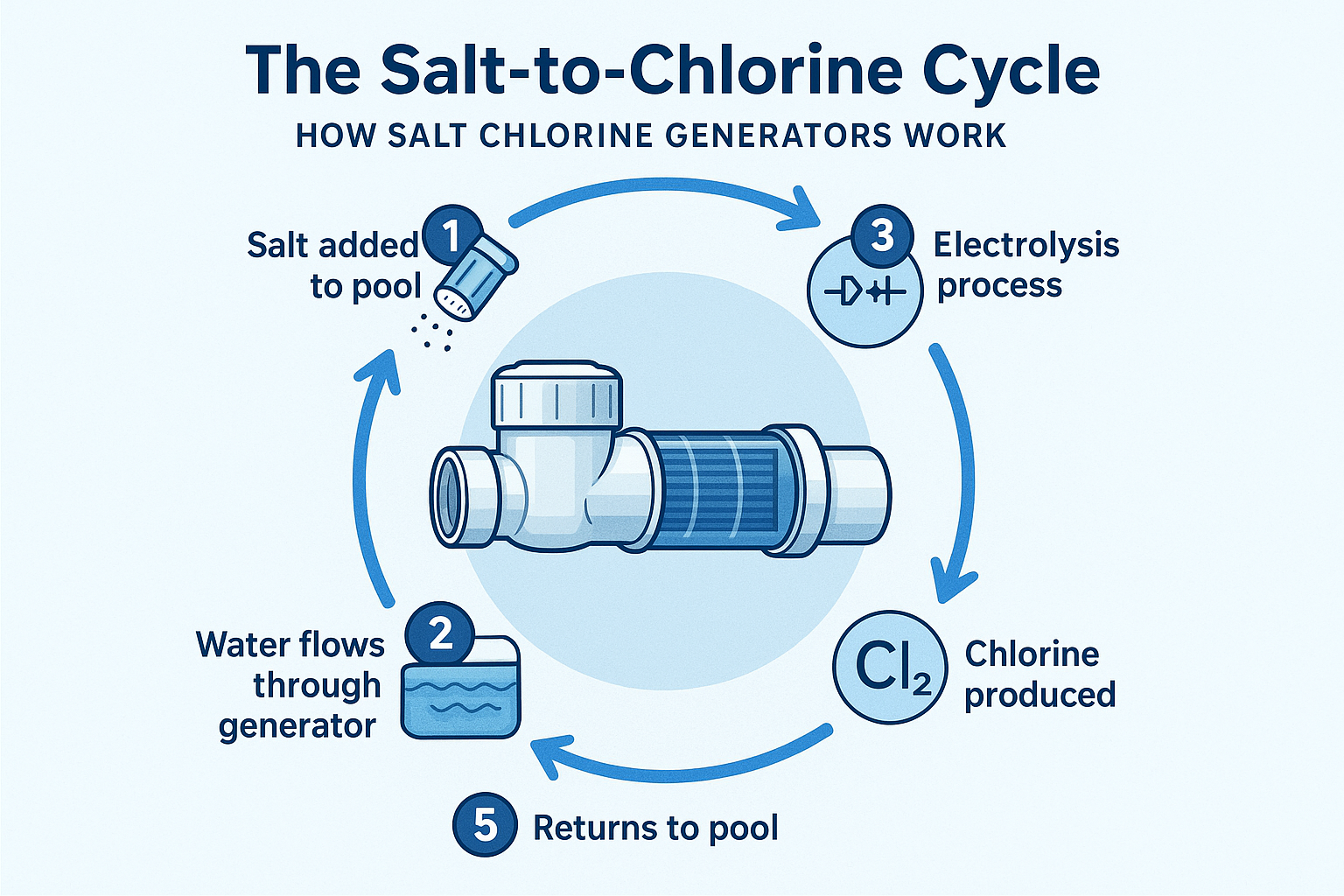
Self-regulating chlorine generators
pH balancing automation
Remote monitoring capabilities
Smartphone alerts and controls
📱 Service Management Technology
Leading Corona pool services offer:
Customer Communication Platforms
Service scheduling apps
Real-time service notifications
Photo documentation of issues
Digital service history tracking
Efficiency Improvements
Route optimization for consistent scheduling
Inventory management for chemical supplies
Weather-based service adjustments
Predictive maintenance scheduling
Environmental Considerations and Eco-Friendly Options
🌱 Sustainable Pool Maintenance
The best pool service in Corona increasingly offers environmentally conscious options:
Chemical Alternatives
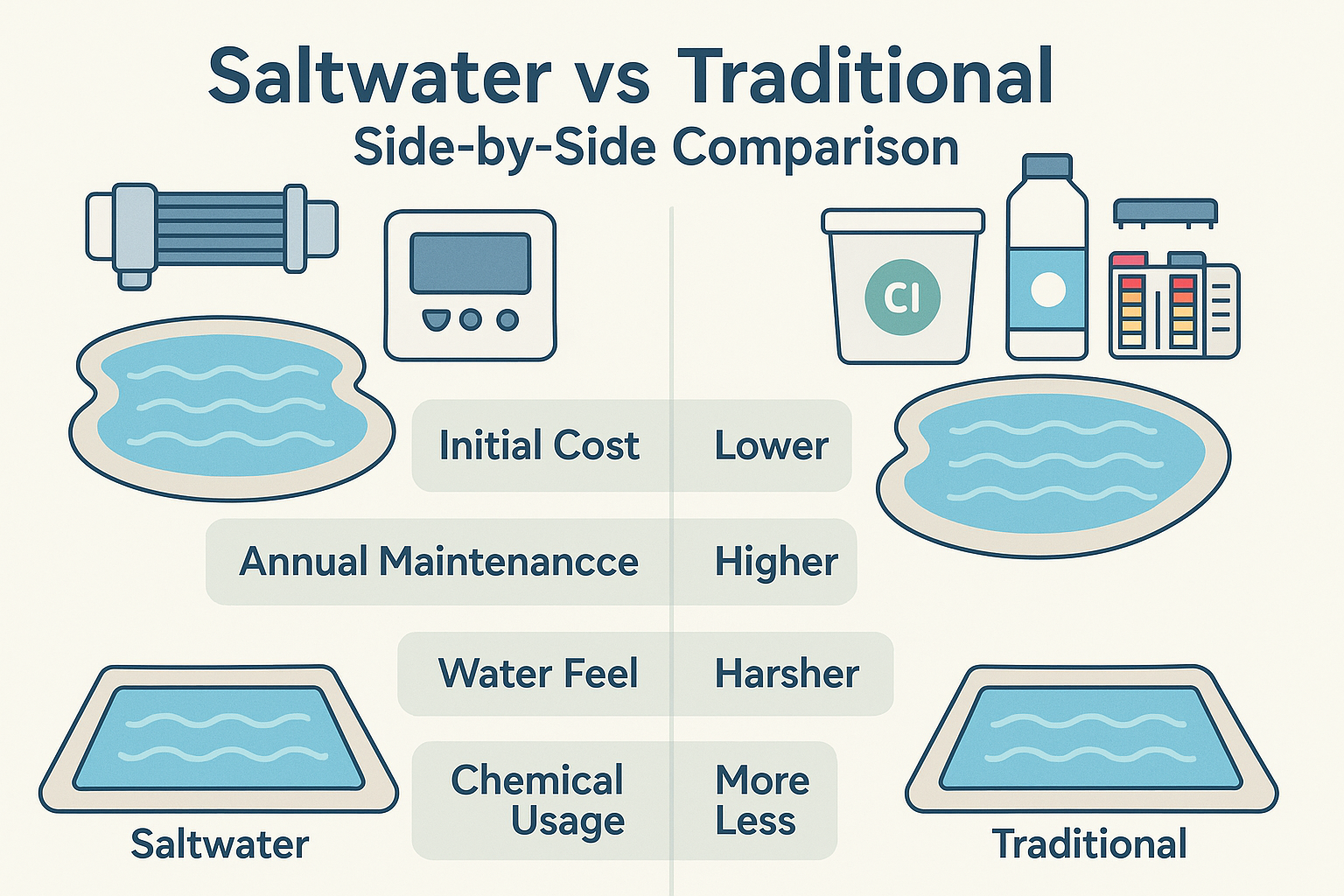
Saltwater chlorination systems
UV sanitization technology
Ozone treatment options
Natural enzyme treatments
Energy Efficiency
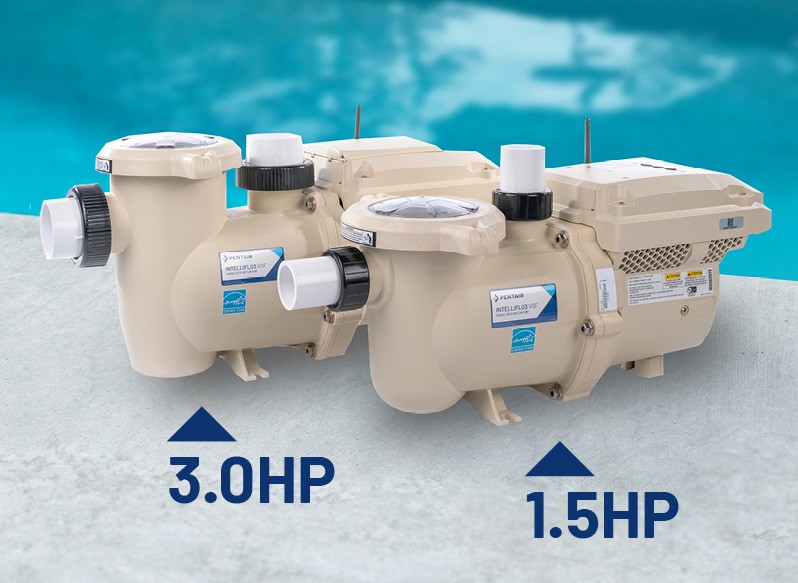
Variable-speed pump installations
Solar heating system maintenance
LED lighting conversions
Smart automation for reduced energy use
💧 Water Conservation
Corona’s occasional drought conditions make water conservation crucial:
Conservation Strategies
Pool cover usage optimization
Leak detection and repair
Backwash water recycling
Efficient filtration scheduling
Sustainable Practices
Reduced chemical runoff through precise application
Equipment recycling programs
Eco-friendly cleaning products
Native landscaping around pool areas
For additional insights on maintaining various aspects of your wellness routine while being environmentally conscious, explore resources about effective workout strategies that can be done sustainably at home.
Building Long-Term Relationships with Pool Service Providers
🤝 Partnership Approach
The most successful pool service relationships function as partnerships:
Mutual Expectations
Clear communication about service standards
Prompt payment and respectful treatment
Access provision and safety considerations
Feedback sharing for continuous improvement
Service Evolution
Seasonal service adjustments
Equipment upgrade consultations
Energy efficiency improvements
Aesthetic enhancement recommendations
📞 Communication Excellence
Regular Check-ins
Monthly service reviews
Seasonal planning discussions
Equipment status updates
Cost-saving opportunity identification
Problem Resolution
Immediate issue reporting protocols
Collaborative solution development
Follow-up confirmation procedures
Preventive measure implementation
Conclusion
Finding the best pool service in Corona requires careful evaluation of credentials, services, pricing, and customer satisfaction. The investment in professional pool maintenance pays dividends through extended equipment life, consistent water quality, time savings, and peace of mind.
Take Action Today:
Research and contact 3-5 highly-rated Corona pool service companies
Schedule consultations to assess your specific needs and their capabilities
Verify credentials including licensing, insurance, and local references
Compare service packages and pricing structures carefully
Start with a trial period to evaluate service quality before committing long-term
Remember, your pool is a significant investment that deserves professional care. Just as you wouldn’t neglect your health or skip essential wellness practices, don’t compromise on pool maintenance quality. The right service provider will keep your Corona pool sparkling clean, properly balanced, and ready for enjoyment year-round.
Your perfect pool service partner is out there—take the first step toward worry-free pool ownership today! 🏊♀️
References
[1] California Contractors State License Board – Pool Service Licensing Requirements
[2] Corona Municipal Water District – Water Quality Reports 2025
[3] National Swimming Pool Foundation – Pool Maintenance Standards
[4] Better Business Bureau – Service Industry Rating Guidelines
[5] California Pool & Spa Association – Industry Best Practices
Discovering the Best Pool Service in Corona, CA for Your Home
Picture this: It’s a scorching summer day in Corona, California, and all you want to do is dive into your backyard pool. But when you peek outside, you’re greeted by cloudy water and floating debris. Sound familiar? If you’re living in Corona, California, you know that having a pool is not just a luxury—it’s practically essential for surviving those triple-digit temperatures. With the blazing sun, a pool becomes your personal oasis. But maintaining that oasis? Well, that’s a whole different story. Let’s dive into why finding the best pool service corona ca can make all the difference between a sparkling retreat and a maintenance nightmare.
Key Takeaways
🏊 Professional pool service saves time and money by preventing costly repairs and ensuring proper chemical balance
🔍 Look for experienced, reliable providers with strong customer reviews and transparent pricing
🌴 Local pool services understand Corona’s climate and can tailor maintenance to regional conditions
💧 Weekly professional maintenance is recommended for most pools to maintain optimal water quality
✅ Proper pool care increases home value and extends the life of your pool equipment
Why You Need Professional Pool Service
First off, maintaining a pool isn’t as easy as it looks. Sure, skimming leaves off the surface might seem like a breeze, but there’s a lot more that goes into it. Balancing chemicals, cleaning filters, checking pumps, inspecting tiles, monitoring water levels… It can feel like a full-time job! And let’s not forget the times when things go wrong—a green pool, anyone? Or worse, equipment failure that could cost thousands to repair.
That’s where professional pool services come in. They handle all the nitty-gritty details, ensuring your pool stays crystal clear and safe for swimming. You’re not just hiring someone to clean; you’re hiring peace of mind. They have the expertise to spot small issues before they become costly repairs, and they can provide valuable advice on the best practices for pool maintenance tailored to your specific pool type and usage.
According to industry standards, proper pool maintenance can extend the life of your pool equipment by up to 50% [1]. That’s significant savings over the lifetime of your pool! Professional technicians are trained to identify warning signs that the average homeowner might miss—subtle changes in water clarity, unusual pump sounds, or early signs of equipment wear.
What to Look for in Pool Service Corona CA
So, what makes a great pool service in Corona, CA? Experience tops the list. You want a company that’s been around the block and knows their way around a pool. Next up is reliability. You need a team that shows up when they say they will, because let’s face it, no one wants to take a dip in a murky pool right before a pool party.
Here’s what I recommend looking for:
✔️ Licensed and insured professionals who meet California state requirements
✔️ Transparent pricing with no hidden fees or surprise charges
✔️ Comprehensive service packages that cover all your pool’s needs
✔️ Emergency response availability for those unexpected issues
✔️ Positive customer reviews from other Corona homeowners
✔️ Modern equipment and eco-friendly options
Customer service is also key. You want someone who listens to your needs and concerns. And perhaps most importantly, price matters. Look for a service that offers value without breaking the bank. After all, maintaining your pool shouldn’t mean emptying your wallet. Transparency in pricing and clear communication about what each service entails can prevent any surprises down the line.
Now, let’s get to the heart of the matter—finding a good pool service in Corona, CA. The city is home to several options, but not all are created equal. It’s crucial to do your homework. Check reviews, ask around, and get quotes. Trust me, it’s worth the effort.
Types of Pool Services Available
Service Type
What It Includes
Frequency
Basic Maintenance
Skimming, vacuuming, chemical testing
Weekly
Full Service
Everything in basic + filter cleaning, equipment inspection
It’s also wise to consider companies that offer flexible service plans, allowing you to tailor the frequency and type of service to meet your needs. Some homeowners might prefer weekly cleanings, while others could benefit from bi-weekly visits or seasonal maintenance. Understanding the cost guide for pool cleaning services can help you budget appropriately.
One local pool service that often comes up in conversations is Corona Pool Service Experts. They’ve been serving the area for years and come highly recommended by many homeowners. Their reputation for reliability and excellent customer service makes them stand out. Plus, they offer a range of services, from regular maintenance to emergency repairs. Their technicians are certified and trained to handle a variety of pool systems, ensuring that regardless of the type of pool you have, they can provide top-notch service.
Benefits of Hiring a Local Pool Service
Choosing a local company has its perks. For one, they understand the local climate and how it affects your pool. Corona’s hot, dry summers and mild winters create unique challenges for pool maintenance. Local professionals know when the pollen count is high and when to adjust chemical levels accordingly. They’re familiar with the hard water issues common in the area and know exactly how to combat them [2].
Plus, supporting a local business means you’re investing in your community, a win-win for everyone. Local services are often more responsive to emergencies, given their proximity, which means if something goes wrong, help is just a call away.
Why Local Matters in Corona
🌞 Climate Expertise: Corona temperatures regularly exceed 100°F in summer, requiring specific chemical adjustments
💧 Water Quality Knowledge: Familiarity with local water hardness and mineral content
🚗 Quick Response Times: Local providers can respond to emergencies within hours, not days
🤝 Community Reputation: Local businesses rely on word-of-mouth and maintain high standards
Additionally, local businesses often have established relationships with local suppliers, which can lead to quicker access to parts and potentially better pricing on necessary equipment or chemicals. This can be particularly beneficial during peak season when demand is high, and supplies may be limited.
Personal Experience With Pool Service
Let me share a quick story. A friend of mine in Corona decided to tackle pool maintenance on his own. He figured, “How hard can it be?” He watched a few YouTube videos, bought some chemicals from the hardware store, and got to work. Fast forward a few months, and he’s dealing with a green pool and a broken pump that was running inefficiently due to improper chemical balance.
The algae had gotten so bad that his kids couldn’t swim for nearly three weeks during the hottest part of summer. He finally called in the pros, and within days, his pool was back to its sparkling self. Moral of the story? Sometimes it’s best to leave it to the experts. The cost of professional service was a fraction of what he ended up spending on repairs and chemical treatments trying to fix the problem on his own—not to mention the lost summer fun.
“I thought I was saving money by doing it myself, but I ended up spending twice as much fixing my mistakes. Now I have a regular pool service, and I wish I’d started with them from day one.” – Corona Homeowner
Maintaining Your Pool Between Professional Visits
While professional pool service in Corona, CA is essential, there are things you can do between visits to keep your pool in great shape. Having a solid checklist to keep pool clean this summer can make a big difference.
Simple Weekly Tasks for Homeowners
Skim the surface daily to remove leaves and debris
Check water level and add water if needed
Empty skimmer baskets to maintain proper circulation
Run your pool pump for 8-12 hours daily during summer
Monitor water clarity and report any changes to your service provider
These simple tasks take just a few minutes but can help your professional pool service work more efficiently and keep your pool looking great between visits.
Understanding Pool Service Costs in Corona
One of the biggest questions homeowners have is: “How much will this cost me?” The truth is, pool service costs can vary widely depending on several factors. For a detailed breakdown, check out how much does pool cleaning service cost.
Factors Affecting Pool Service Pricing
Pool size: Larger pools require more chemicals and time
Service frequency: Weekly service costs more than bi-weekly or monthly
Pool type: Saltwater pools, spas, and specialty features affect pricing
Condition: Neglected pools require more intensive (and expensive) initial treatment
Location: Accessibility and distance can impact service fees
Season: Some companies offer seasonal pricing adjustments
In Corona, you can typically expect to pay between $80-$150 per month for basic weekly service, while full-service packages might range from $150-$300 monthly [3]. While this might seem like a significant expense, it’s far less than the cost of major repairs or pool resurfacing due to neglect.
Seasonal Pool Care in Corona, CA
Corona’s climate means your pool needs different care throughout the year. While we don’t experience harsh winters like other parts of the country, seasonal adjustments are still important.
Summer Pool Service (May-September)
During Corona’s intense summer heat, your pool works overtime. Professional services should:
Increase chemical monitoring frequency
Check for excessive evaporation
Ensure filtration systems are running optimally
Monitor for algae growth more closely
Adjust chemical levels for increased usage
Fall and Winter Considerations (October-April)
Even though Corona winters are mild, your pool still needs attention. Some homeowners choose to reduce service frequency, but don’t skip it entirely! If you’re considering seasonal changes, learn about great tips for a successful pool closing.
FAQs About Pool Service in Corona, CA
How often should I have my pool serviced?
Most professionals recommend weekly service to keep your pool in top condition. However, the frequency may vary based on how often you use the pool, weather conditions, and if any special events are planned that might require extra cleaning. During Corona’s peak summer months, weekly service is essential.
What if my pool turns green?
A green pool is usually a sign of algae growth, which can happen quickly in Corona’s warm climate. A professional can shock the pool and balance the chemicals to clear it up quickly. They can also identify underlying issues that may have contributed to the problem, such as poor filtration or inadequate circulation. Don’t wait—algae can damage pool surfaces if left untreated.
Are there eco-friendly pool service options?
Yes! Many companies now offer eco-friendly services, using fewer harsh chemicals and energy-efficient equipment. They can also advise on sustainable practices, such as using solar covers to reduce evaporation and conserve water, or installing energy-efficient pool pumps. This is especially important in California, where water conservation is crucial.
Do I need pool service year-round in Corona?
While Corona’s winters are mild, year-round service is recommended. Even when you’re not swimming, your pool needs chemical balancing, debris removal, and equipment monitoring. Many homeowners opt for reduced service frequency in winter (bi-weekly instead of weekly) to save money while maintaining pool health.
What’s included in a typical pool service visit?
A standard visit typically includes: skimming the surface, vacuuming, brushing walls and tiles, emptying skimmer baskets, testing and balancing chemicals, checking equipment operation, and providing a service report. More comprehensive packages may include filter cleaning, equipment maintenance, and detailed inspections.
Can pool service help with high energy bills?
Absolutely! Professional technicians can optimize your pump run times, recommend energy-efficient equipment upgrades, and ensure your system is running at peak efficiency. In Corona’s climate, these adjustments can significantly reduce your monthly energy costs [4].
Choosing the Right Pool Service Plan for Your Needs
Not every pool owner needs the same level of service. Here’s how to determine what’s right for you:
Basic Plan – Best for:
Experienced pool owners who handle some maintenance
Pools with light usage
Homeowners on a tight budget
Those who enjoy some hands-on pool care
Full-Service Plan – Best for:
Busy families who want hands-off maintenance
Pools with heavy usage
Homeowners who want comprehensive care
Those who value convenience over cost savings
Premium Plan – Best for:
Luxury pools with special features
Pools with spas, waterfalls, or complex systems
Homeowners who want white-glove service
Properties used for entertaining
Red Flags to Avoid When Choosing Pool Service
Not all pool services are created equal. Watch out for these warning signs:
⚠️ No license or insurance – Always verify credentials
⚠️ Extremely low prices – If it seems too good to be true, it probably is
⚠️ Poor communication – Difficulty reaching them or getting quotes is a bad sign
⚠️ No written agreements – Always get service terms in writing
⚠️ Negative reviews – Pay attention to patterns in customer complaints
⚠️ Pressure tactics – Reputable companies don’t rush you into decisions
⚠️ Vague service descriptions – You should know exactly what you’re paying for
The Long-Term Value of Professional Pool Service
Investing in professional pool service in Corona, CA isn’t just about keeping your water clean—it’s about protecting your investment. A well-maintained pool can add 7-15% to your home’s value, while a neglected pool can actually decrease property value [5].
Consider these long-term benefits:
💰 Equipment longevity: Proper maintenance can double the lifespan of pumps, filters, and heaters
🏡 Home value: A pristine pool is a major selling point for potential buyers
💧 Water conservation: Proper chemical balance reduces the need for frequent draining and refilling
⚡ Energy savings: Optimized equipment runs more efficiently, reducing utility costs
😌 Peace of mind: No more worrying about surprise repairs or unsafe swimming conditions
Conclusion
In conclusion, while having a pool in Corona, CA, is a fantastic way to beat the heat and create lasting family memories, maintaining it can be challenging without professional help. Hiring a professional pool service in Corona, CA can save you time, stress, and money in the long run. By choosing the right service, you’ll ensure your pool remains a refreshing retreat all year long. So, take the plunge and find the best pool service in your area—you won’t regret it!
Investing in professional pool maintenance is an investment in your home’s value and your family’s enjoyment. With the right care, your pool can be a source of relaxation and fun for years to come, making every sunny day in Corona feel like a mini-vacation. Remember, the key to a pristine pool is not just in the cleaning, but in the consistent, expert maintenance that addresses problems before they arise.
Your Next Steps
Ready to find the perfect pool service? Here’s what to do:
Research local providers and read customer reviews
Get at least 3 quotes to compare pricing and services
Ask about certifications and insurance coverage
Request a service agreement in writing before committing
Start with a trial period if available to ensure it’s the right fit
Schedule your first service and enjoy your worry-free pool!
Whether you’re sipping a cool drink by the water’s edge or hosting a barbecue with friends and family, you can do so with the confidence that your pool is in expert hands. Don’t let pool maintenance stress you out another day—reach out to a trusted local pool service provider and reclaim your weekends for what really matters: enjoying that beautiful Corona sunshine with the people you love.
References
[1] Pool & Spa News, “The Impact of Regular Maintenance on Pool Equipment Lifespan,” 2025
[2] California Department of Water Resources, “Regional Water Quality Reports,” 2025
[3] HomeAdvisor, “Pool Cleaning and Maintenance Cost Guide,” 2025
[4] Energy.gov, “Swimming Pool Energy Efficiency,” U.S. Department of Energy, 2025
[5] National Association of Realtors, “Home Features That Add Value,” 2025
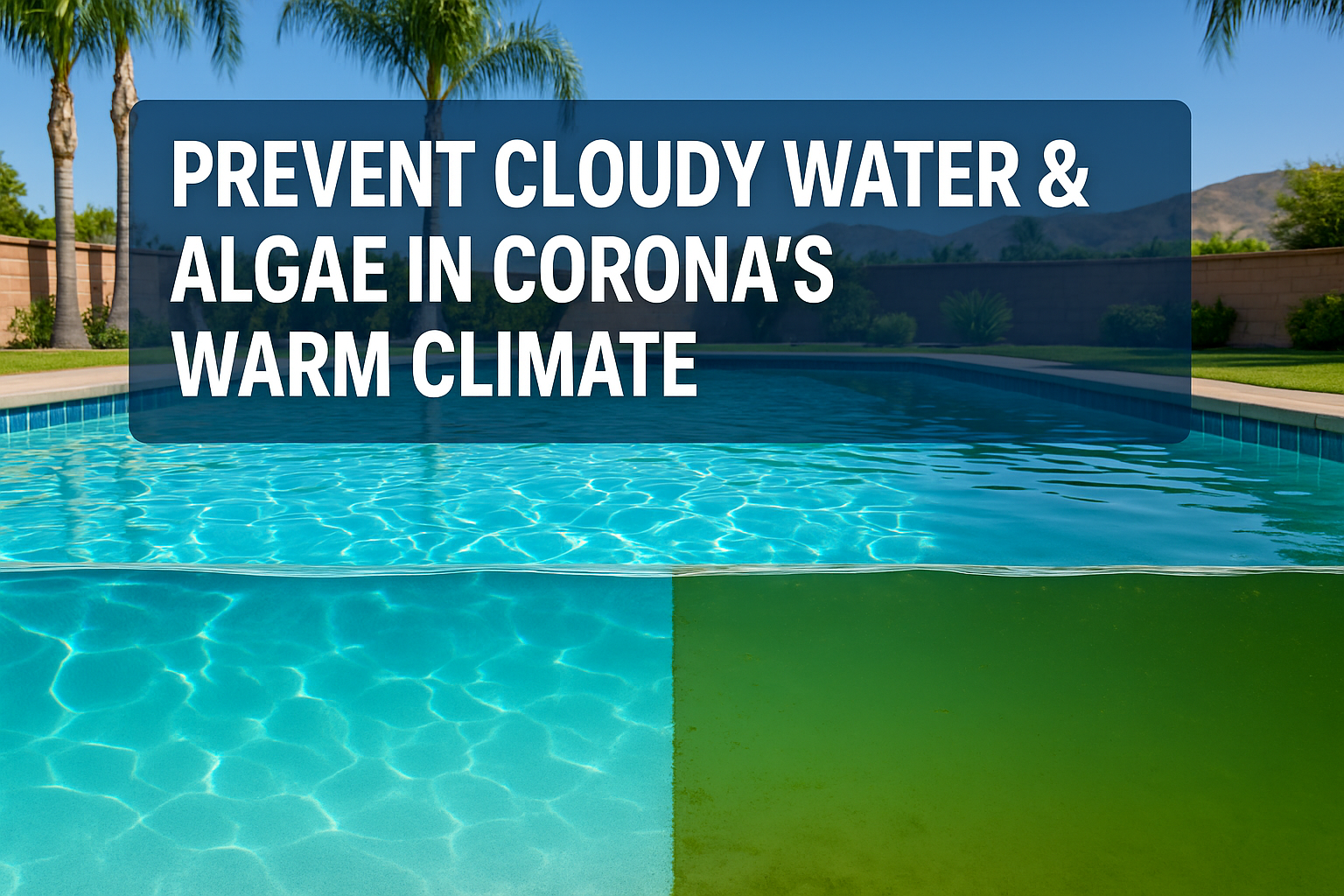
Picture this: It’s a scorching Saturday afternoon in Corona, and you’re ready to dive into your backyard oasis. But instead of inviting crystal-clear water, you’re staring at a murky, green-tinged pool that looks more like a swamp than a swimming spot. If you’ve experienced this frustrating scenario, you’re not alone. Cloudy Water & Algae in Corona are among the most common complaints I hear from local pool owners, and the region’s unique warm climate creates the perfect conditions for these problems to flourish.
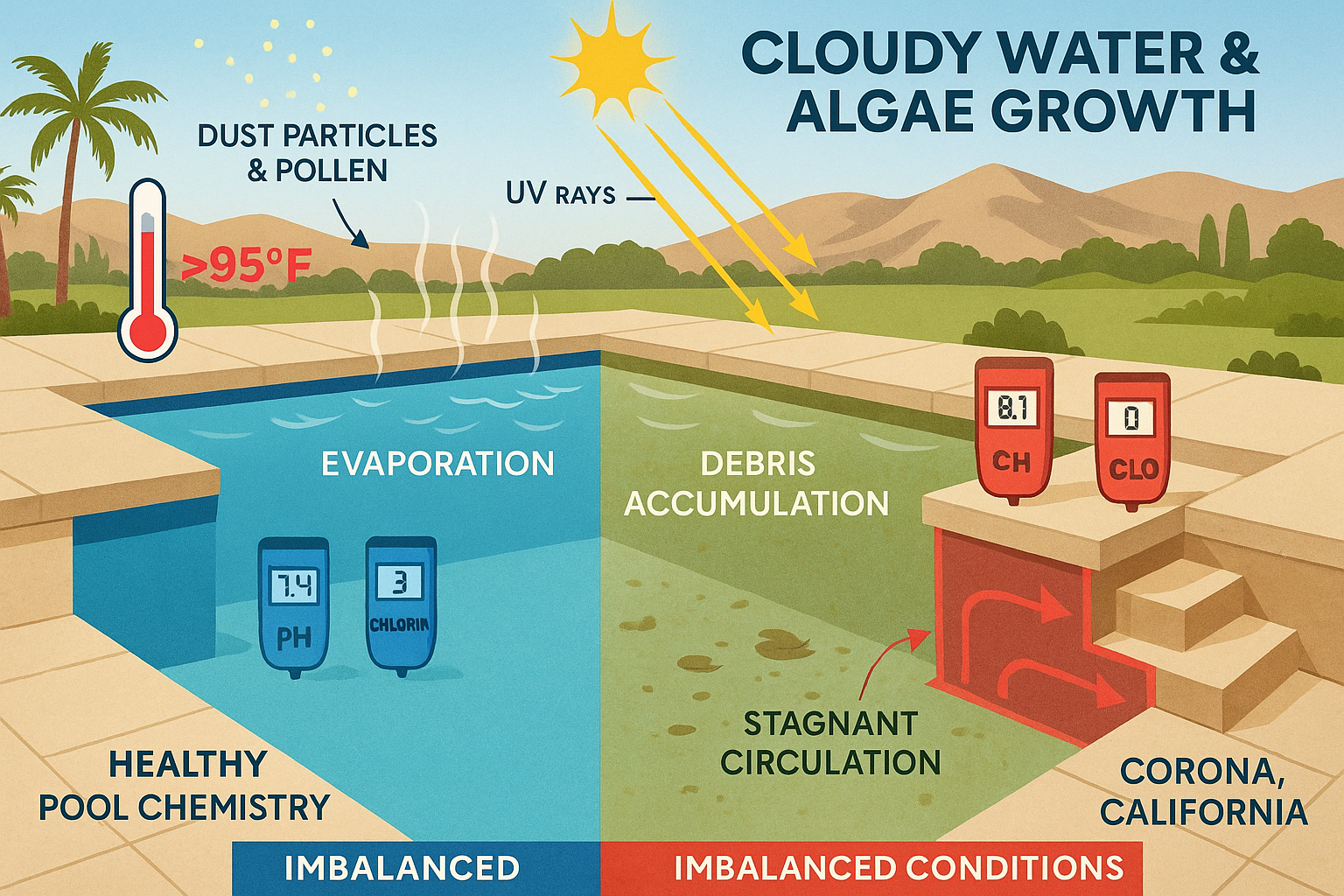
Corona’s hot, dry summers—with temperatures regularly soaring above 95°F—combined with intense UV exposure, dust storms, and rapid evaporation, create a challenging environment for maintaining pristine pool water. The good news? With the right knowledge and consistent maintenance routine, you can keep your pool sparkling clear all year long, even during the most intense heat waves.
Key Takeaways
Test your water chemistry at least twice weekly during Corona’s warm months to maintain proper chlorine (2.0-4.0 ppm) and pH (7.2-7.6) levels that prevent algae growth
Daily brushing of pool surfaces is essential in warm climates to prevent algae from establishing colonies in low-circulation areas like steps and corners
Corona’s high temperatures accelerate chemical consumption and evaporation, requiring more frequent monitoring and adjustments than cooler regions
Preventative algaecide treatments during summer months significantly reduce the likelihood of algae blooms that cause cloudy water
Proper circulation and filtration are your first line of defense—never turn off your pump during heat waves, even to save on electricity
Why Pools in Corona Are Prone to Algae & Cloudy Water
Understanding why Cloudy Water & Algae in Corona are such persistent problems starts with recognizing our unique environmental challenges. Corona sits in the Inland Empire region of Southern California, where summer temperatures frequently exceed 100°F and the intense sun beats down relentlessly on exposed pool surfaces.
High Temperatures Accelerate Algae Growth
Warm water is like a five-star resort for algae. When pool temperatures climb above 85°F—which happens regularly in Corona from May through October—algae reproduction rates skyrocket[1]. Each 10-degree increase in water temperature can double the growth rate of certain algae species, turning a small problem into a full-blown green pool in just 24-48 hours.
Evaporation Creates Chemical Imbalances
Corona’s low humidity and high temperatures cause pools to lose 1-2 inches of water per week during peak summer months[2]. While water evaporates, chemicals don’t—they become more concentrated. This disrupts your carefully balanced chemistry, leading to pH spikes, increased calcium hardness, and other imbalances that cloud your water.
Organic Matter Buildup
Our region experiences frequent Santa Ana winds that blow dust, pollen, leaves, and debris directly into pools. Add sunscreen, body oils, and other contaminants from swimmers, and you’ve got a nutrient-rich environment where algae and bacteria thrive. This organic matter also overwhelms your filtration system, contributing to cloudy water conditions.
The Perfect Storm: Warm Water + Poor Circulation
When these factors combine—especially if your pump isn’t running long enough or your filter is clogged—you create stagnant pockets of warm water where algae colonies establish themselves. These dead zones, typically found in corners, on steps, and around pool fixtures, become algae breeding grounds that quickly spread throughout your entire pool.
Top 5 Causes of Cloudy Pool Water in Southern California
Let me walk you through the most common culprits I encounter when diagnosing Cloudy Water & Algae in Corona pools:
1. Imbalanced Chlorine or pH Levels
Chlorine is your primary defense against both cloudy water and algae. When chlorine levels drop below 2.0 ppm—which happens quickly in Corona’s intense sun—algae and bacteria multiply rapidly[3]. Similarly, when pH drifts above 7.6, chlorine effectiveness plummets by up to 50%, even if you have adequate chlorine levels.
Chemical Parameter
Ideal Range
Corona Climate Impact
Free Chlorine
2.0-4.0 ppm
Depletes 2-3x faster in heat
pH
7.2-7.4
Rises quickly due to evaporation
Cyanuric Acid
30-50 ppm
Essential for UV protection
Total Alkalinity
80-120 ppm
Stabilizes pH levels
2. Poor Filtration or Clogged Filters
Your filter is the workhorse that removes microscopic particles causing cloudiness. When filters become clogged with debris, oils, and minerals from Corona’s hard water, they can’t effectively clean your pool. I recommend checking your filter pressure weekly—when it rises 8-10 PSI above the clean baseline, it’s time to backwash or clean.
3. Dead Algae Not Properly Vacuumed
Here’s a mistake I see constantly: pool owners shock their green pool, killing the algae, but then fail to vacuum the dead algae to waste. Instead, they run their filter, which can’t handle the volume of dead organic matter. The result? Persistently cloudy water that won’t clear, even with proper chemistry.
4. High Calcium Hardness from Local Water
Corona’s municipal water supply contains relatively high calcium levels. Over time, especially as water evaporates and you add more tap water, calcium hardness can climb above 400 ppm, causing cloudy water and scale formation[4]. This is particularly problematic for pools that haven’t been partially drained in several years.
5. Heavy Pool Usage
🏊♂️ Summer pool parties, kids playing all day, and frequent guests introduce massive amounts of contaminants—sweat, oils, cosmetics, and other organic matter. Each swimmer can introduce up to a pint of perspiration and body oils during a typical swim session, overwhelming your sanitizer and creating cloudy conditions.
Algae Types Found in Corona Pools (and How to Spot Them)
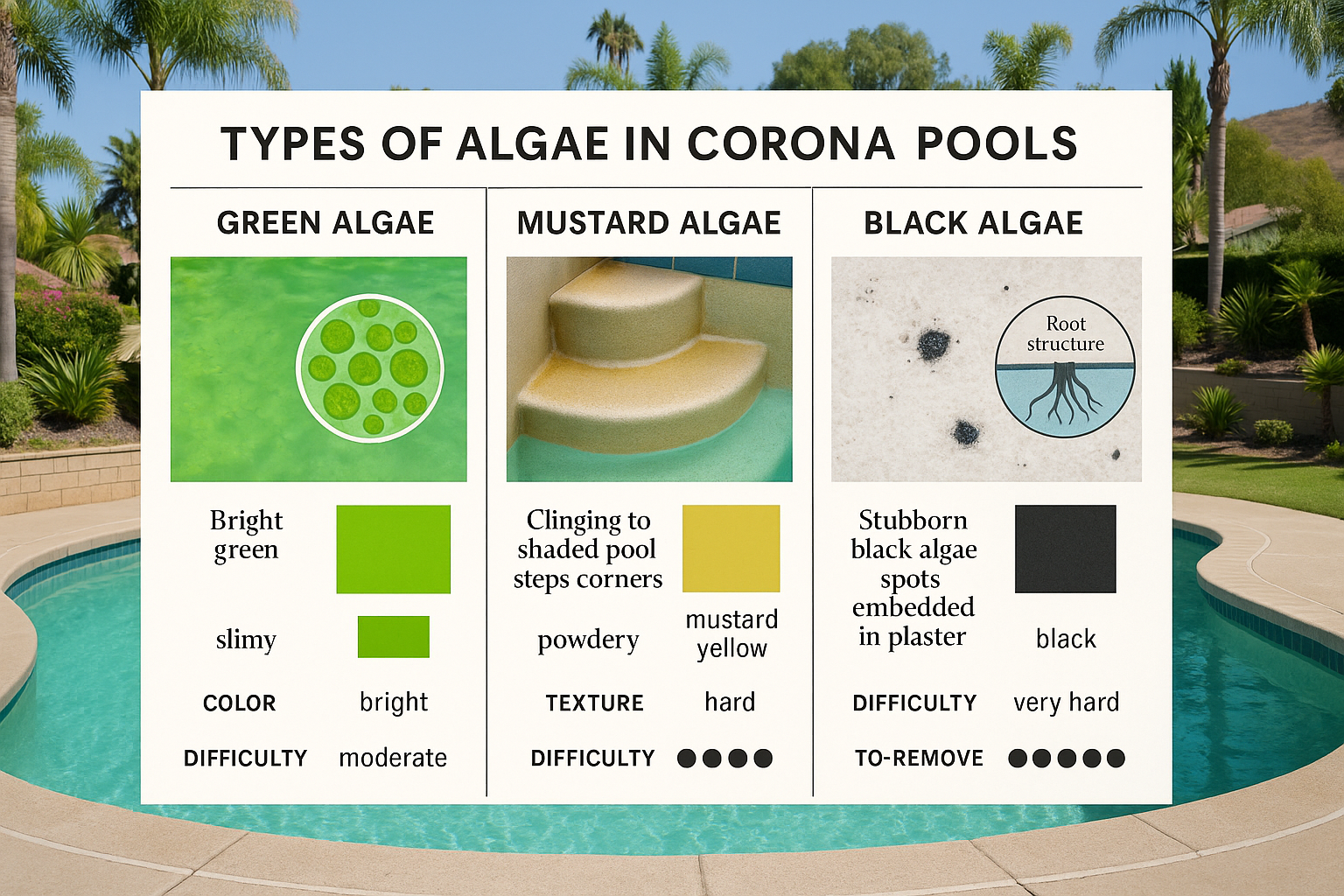
Not all algae are created equal, and identifying which type you’re dealing with is crucial for effective treatment. Here are the three main varieties of Cloudy Water & Algae in Corona pools:
Green Algae (Chlorophyta)
The most common type, green algae appears as a greenish tint in the water or bright green coating on pool walls and floors. It’s free-floating, which is why it clouds your water. Green algae is relatively easy to eliminate with proper shocking and brushing, but it spreads rapidly in warm water.
Visual signs:
Water has a greenish tint or is completely green
Slippery coating on pool surfaces
Cloudy water that won’t clear with filtration alone
Visible floating particles
Mustard/Yellow Algae
This sneaky variety looks like sand or pollen settled on your pool floor, typically in shaded areas. Mustard algae is chlorine-resistant and often returns even after treatment if you don’t follow specific protocols. It’s more common in Corona pools that have partial shade from trees or structures.
Visual signs:
Yellow or brownish-yellow patches on pool floor
Concentrated in shaded corners and on steps
Brushes away easily but returns quickly
Often mistaken for dirt or sand
Black Algae (Cyanobacteria)
The most stubborn variety, black algae forms dark blue-green or black spots with protective layers and deep roots that penetrate pool plaster. Black algae is technically a bacteria, not true algae, which is why it’s so difficult to eliminate. It requires aggressive brushing, specialized algaecides, and sometimes professional intervention.
Visual signs:
Small black or dark blue-green spots (pin-head to quarter-sized)
Rough texture when you run your hand over it
Roots embedded in pool surface
Resistant to normal chlorine levels
Behavioral Differences
Understanding how these algae behave helps you prevent them:
Green algae loves warm, stagnant water and blooms rapidly during heat waves
Mustard algae prefers shaded areas and survives in higher chlorine levels
Black algae establishes in rough surfaces and cracks, creating protective colonies
Weekly Maintenance Checklist for Clear Water
Consistency is everything when preventing Cloudy Water & Algae in Corona pools. Here’s my proven weekly maintenance routine that keeps pools crystal clear:
Monday: Skim + Vacuum
✅ Skim the surface to remove leaves, insects, and floating debris ✅ Vacuum the pool floor, paying special attention to corners and steps ✅ Empty skimmer and pump baskets to maintain optimal circulation ✅ Check water level—should be halfway up the skimmer opening
Wednesday: Brush Walls and Steps
✅ Brush all pool surfaces, including walls, steps, benches, and behind ladders ✅ Focus on low-circulation areas where algae starts forming ✅ Use a stainless steel brush for stubborn spots or plaster pools ✅ Brush toward the main drain so debris can be filtered out
Friday: Balance Water Chemistry
✅ Test chlorine levels (target: 2.0-4.0 ppm) ✅ Test pH (target: 7.2-7.4 for optimal chlorine effectiveness) ✅ Check stabilizer/cyanuric acid (target: 30-50 ppm) ✅ Test total alkalinity (target: 80-120 ppm) ✅ Add chemicals as needed and allow circulation before swimming
Saturday: Clean Filters
✅ Check filter pressure gauge ✅ Backwash sand or DE filters if pressure is 8-10 PSI above baseline ✅ Rinse cartridge filters or replace if more than 1 year old ✅ Inspect filter for damage or wear
As Needed: Shock Treatment
✅ Shock weekly during heavy use or after storms ✅ Shock immediately if water appears cloudy or has chlorine odor ✅ Always shock at dusk or night to prevent UV degradation ✅ Run pump for 8+ hours after shocking
“The single biggest mistake Corona pool owners make is inconsistent testing during summer months. When temperatures exceed 95°F, I recommend testing chemistry every 2-3 days instead of weekly—it’s the difference between a clear pool and a green swamp.” – Professional Pool Service Technician
How to Prevent Algae Growth in Corona Pools
Prevention is infinitely easier than remediation when it comes to Cloudy Water & Algae in Corona pools. Here are my top strategies:
Maintain Proper Chlorine Residual
Free chlorine is your primary algae prevention tool. In Corona’s warm climate, maintain levels at the higher end of the acceptable range (3.0-4.0 ppm) during summer months. The intense UV exposure and high temperatures deplete chlorine rapidly—sometimes reducing levels by 50% in just 24 hours[5].
Pro tip: Test chlorine in the morning before the sun hits your pool to get accurate readings of overnight consumption.
Regular Brushing of High-Traffic Areas
I can’t stress this enough: brushing prevents algae from establishing colonies. Even with perfect chemistry, algae can attach to pool surfaces and begin forming protective layers. Daily brushing of steps, benches, corners, and behind ladders disrupts this process and keeps surfaces algae-free.
Focus on:
🎯 Pool steps and entry areas
🎯 Shaded corners and walls
🎯 Around return jets and skimmers
🎯 Behind ladders and handrails
🎯 Bench seating and tanning ledges
Use Algaecides During High-Risk Months
Preventative algaecide treatments provide an extra layer of protection during Corona’s brutal summer months (June-September). I recommend using a quality quaternary ammonium algaecide weekly or a long-lasting polyquat algaecide monthly.
⚠️ Important: Algaecides supplement chlorine but don’t replace it. Maintain proper chlorine levels even when using algaecides.
Keep Phosphate Levels Low
Phosphates are algae fertilizer, entering your pool through lawn fertilizers, leaves, and even some pool chemicals. When phosphate levels exceed 500 ppb, algae growth accelerates dramatically[6]. Consider testing phosphates monthly and using a phosphate remover if levels are elevated.
Never Turn Off Pumps During Heat Waves
I understand the temptation to save electricity during expensive summer months, but running your pump is non-negotiable for preventing cloudy water and algae. During heat waves, I actually recommend increasing circulation time to 10-12 hours daily to maintain proper filtration and chemical distribution.
Should You Shock Your Pool in Corona’s Climate?
Absolutely—but timing and technique matter significantly in our warm climate.
When and How Often to Shock
Shock your pool weekly during summer in Corona, regardless of how clear it looks. High temperatures, heavy use, and intense UV exposure create a constant demand for oxidation. Additionally, shock immediately after:
🌊 Heavy rain or windstorms
🌊 Pool parties or high bather loads
🌊 Detecting chlorine odor (indicates chloramines)
🌊 Water appears dull or slightly cloudy
🌊 Combined chlorine exceeds 0.5 ppm
Best Times to Apply (Night vs Day)
Always shock at dusk or after sunset. Corona’s intense sunlight rapidly degrades chlorine—shocking during the day wastes chemicals and reduces effectiveness. By shocking at night, you give chlorine 8-10 hours to work before UV exposure begins.
The overnight shocking process:
Test and balance pH to 7.2-7.4 first
Apply shock around sunset
Run pump continuously overnight
Test chlorine in morning
Safe to swim when chlorine drops below 5 ppm
Liquid vs Granular Shock
Both have advantages in Corona’s climate:
Liquid chlorine (sodium hypochlorite):
✅ Dissolves instantly—no waiting
✅ Doesn’t raise cyanuric acid levels
✅ Won’t cloud water
❌ Degrades quickly in heat—use fresh product
❌ Raises pH slightly
Granular shock (calcium hypochlorite):
✅ More stable in storage
✅ Higher available chlorine percentage
✅ Longer shelf life in Corona’s heat
❌ Can temporarily cloud water
❌ Increases calcium hardness over time
For Corona pools, I generally prefer liquid chlorine for regular shocking and reserve cal-hypo for severe algae blooms.
Common Mistakes That Cause Cloudy Water
Even experienced pool owners make these errors that lead to persistent Cloudy Water & Algae in Corona problems:
Overuse of Clarifiers
Clarifiers are a band-aid, not a solution. While they temporarily improve water clarity by clumping particles together, overuse can actually make cloudiness worse by overwhelming your filter. Address the root cause—improper chemistry or poor filtration—instead of relying on clarifiers.
Poor Circulation Time Settings
Many Corona pool owners run their pumps only 4-6 hours daily to save electricity. This is insufficient during warm months. Your pump should run long enough to turn over all pool water at least once daily—typically 8-10 hours for most residential pools, and up to 12 hours during heat waves.
A dirty filter can’t effectively remove the particles causing cloudiness. Check your filter pressure weekly and clean when pressure rises 8-10 PSI above the clean baseline. In Corona’s dusty environment, this often means cleaning every 2-3 weeks during summer.
Not Brushing Walls Regularly
I’ve said it before, but it bears repeating: brushing is essential. Algae and biofilm attach to surfaces where your filter can’t reach them. Even with perfect chemistry, neglecting to brush allows algae to establish protected colonies that eventually bloom into cloudy, green water.
Ignoring Early Warning Signs
Cloudy water doesn’t appear overnight—there are always early indicators:
🚩 Water looks slightly dull or hazy
🚩 Pool floor isn’t as visible as usual
🚩 Slight chlorine odor
🚩 Slippery spots on steps or walls
🚩 Difficulty maintaining chlorine levels
Address these signs immediately rather than waiting for full-blown cloudiness or algae blooms.
Saltwater Pools: Algae Prevention Tips
Saltwater pools aren’t immune to Cloudy Water & Algae in Corona—in fact, they face unique challenges in our climate.
Salt Cell Maintenance
Your salt chlorine generator (SCG) produces chlorine by electrolysis, but Corona’s hard water causes calcium scale buildup on the cell plates, reducing efficiency[7]. Inspect your cell monthly and clean it when you notice white scale deposits.
Cleaning process:
Turn off pump and remove cell
Mix 1 part muriatic acid to 4 parts water in a bucket
Submerge scaled end of cell for 15-20 minutes
Rinse thoroughly and reinstall
Never use metal tools to scrape plates
Adjusting for Salinity Loss Due to Evaporation
Here’s a counterintuitive fact: evaporation doesn’t remove salt. When water evaporates in Corona’s heat, salt concentration actually increases. However, when you add fresh water to compensate for evaporation, you dilute the salt level.
Test salinity monthly and maintain 2700-3400 ppm for optimal chlorine production. Add pool-grade salt as needed, allowing 24 hours for complete dissolution and distribution.
Special Algaecides for Salt Systems
Not all algaecides are compatible with saltwater systems. Avoid copper-based algaecides, which can stain pool surfaces and damage the salt cell. Instead, use:
Enzyme-based products for organic matter breakdown
Don’t Assume Your SCG Handles Everything
The biggest misconception about saltwater pools: “They maintain themselves.” Your SCG only produces chlorine—you still need to:
Monitor and adjust pH (salt systems tend to raise pH)
Maintain proper cyanuric acid levels
Balance alkalinity and calcium hardness
Brush and vacuum regularly
Clean filters on schedule
How Brookside Pool Service Keeps Corona Pools Clear Year-Round
Professional pool service isn’t just about convenience—it’s about expertise and consistency that prevents Cloudy Water & Algae in Corona pools before problems start.
Weekly Visits
Our technicians visit your property every week, regardless of weather or season. This consistency ensures we catch small chemistry imbalances or equipment issues before they escalate into expensive problems. Each visit includes:
Complete surface skimming and debris removal
Thorough brushing of all pool surfaces
Vacuuming pool floor and steps
Emptying skimmer and pump baskets
Visual equipment inspection
Comprehensive Water Testing
We test 8-10 chemical parameters during each visit, far beyond the basic chlorine and pH that most homeowners check. Our testing includes:
Free and combined chlorine
pH levels
Total alkalinity
Calcium hardness
Cyanuric acid (stabilizer)
Salt levels (for saltwater pools)
Phosphates (monthly)
Total dissolved solids (quarterly)
Filter Backwashing and Maintenance
Proper filter maintenance is crucial in Corona’s dusty environment. We monitor filter pressure, backwash or clean filters on schedule, and inspect for damage or wear. We also track when filter media (sand, cartridges, or DE) needs replacement—typically every 3-5 years depending on usage.
Proactive Algae Prevention Plan
Rather than reacting to algae blooms, we implement a year-round prevention strategy tailored to Corona’s climate:
Heat wave protocols: More frequent testing, extended pump run times, shock treatments
Post-storm service: Emergency visits after Santa Ana winds or rare summer storms
Monthly phosphate control: Testing and treatment to eliminate algae nutrients
Equipment Expertise
Our technicians are trained to identify equipment issues that contribute to cloudy water:
Pump problems reducing circulation
Leaking valves causing chemistry imbalances
Aging salt cells producing insufficient chlorine
Timer malfunctions shortening circulation periods
Heater issues affecting water chemistry
We provide detailed recommendations and can coordinate repairs, saving you time and preventing water quality problems.
FAQs About Pool Water Clarity & Algae in Corona
“Is cloudy water safe to swim in?”
Generally, no. Cloudy water indicates either chemical imbalance or high bacteria/algae levels—both potentially harmful. The cloudiness itself prevents you from seeing swimmers in distress, creating a safety hazard. Don’t allow swimming until water is crystal clear and chemistry is balanced[8].
“How long does it take to clear green pool water?”
Typically 3-7 days for a moderately green pool in Corona’s climate, following this process:
Day 1: Heavy shock treatment (2-3x normal dose)
Days 2-3: Continued shocking and brushing
Day 4: Vacuum dead algae to waste
Days 5-7: Fine-tuning chemistry and filtration
Severely green pools or those with black algae may take 2-3 weeks. Professional service can often accelerate this timeline.
“Do salt pools get algae?”
Absolutely. Saltwater pools produce chlorine differently than traditional pools, but they’re equally susceptible to algae if chlorine levels drop or maintenance is neglected. The misconception that “salt kills algae” causes many Corona saltwater pool owners to experience algae blooms.
“Why does my pool keep getting cloudy even with good chemistry?”
Likely a filtration issue. If your chemistry tests perfect but water remains cloudy, check:
Filter cleanliness and pressure
Pump operation and flow rate
Circulation time (should be 8-10+ hours daily)
Return jet direction (should promote circulation)
Dead zones where water doesn’t circulate
Sometimes the filter media itself needs replacement, or you may need a larger/more efficient filter for your pool size.
“Can I prevent algae without using algaecide?”
Yes, but it requires perfect execution. Maintaining chlorine at 3.0-4.0 ppm, pH at 7.2-7.4, daily brushing, and proper circulation will prevent algae without algaecide. However, in Corona’s challenging climate, algaecide provides valuable insurance during heat waves, vacations, or equipment malfunctions.
Book a Free Water Quality Assessment in Corona, CA
Don’t let Cloudy Water & Algae in Corona ruin another summer. Brookside Pool Service offers complimentary water quality assessments for Corona-area homeowners, including:
✨ Comprehensive 10-point water chemistry analysis ✨ Equipment performance evaluation ✨ Customized maintenance plan for your specific pool and usage patterns ✨ Written report with actionable recommendations ✨ No-obligation service quote
Our Corona Service Areas
We proudly serve all Corona ZIP codes and neighborhoods:
92879 (Corona Hills, South Corona)
92880 (Downtown Corona, Dos Lagos)
92881 (North Corona, Sycamore Creek)
92882 (Green River, Eagle Glen)
92883 (Temescal Valley)
Why Choose Brookside Pool Service?
🏆 Licensed and Insured – Full liability coverage protects your property 🏆 15+ Years Experience – Specialized expertise in Corona’s unique climate challenges 🏆 5-Star Reviews – Hundreds of satisfied customers across the Inland Empire 🏆 Transparent Pricing – No hidden fees or surprise charges 🏆 Guaranteed Results – We stand behind our work with a satisfaction guarantee
Ready to enjoy crystal-clear water all year? Call us at (951) 555-POOL or visit our website to schedule your free assessment. Same-day emergency service available for severe algae blooms or equipment failures.
Conclusion
Maintaining crystal-clear pool water in Corona’s challenging warm climate doesn’t have to be an endless battle. By understanding why Cloudy Water & Algae in Corona pools are so common—high temperatures, rapid evaporation, intense UV exposure, and dust—you can implement targeted prevention strategies that keep your pool sparkling year-round.
The key takeaways for Corona pool owners:
Test frequently (at least twice weekly during warm months), maintain proper chemistry (chlorine 2.0-4.0 ppm, pH 7.2-7.4), brush daily to prevent algae colonies, ensure adequate circulation (8-12 hours daily in summer), and address problems immediately before they escalate.
Remember that consistency matters more than intensity. A pool that receives regular weekly maintenance will always outperform one that gets sporadic attention, regardless of how thorough that occasional service might be.
Your Action Plan for This Week
Test your water chemistry today – Don’t wait until the weekend
Inspect your filter pressure – Clean or backwash if needed
Brush all pool surfaces – Pay special attention to steps and corners
Evaluate your circulation time – Increase to 10+ hours if you’re experiencing cloudiness
Schedule professional service – If you’re struggling with persistent issues
Corona’s warm climate creates unique challenges, but with the right knowledge and consistent effort, you can enjoy a pristine backyard oasis that’s always ready for swimming. Whether you choose to maintain your pool yourself or partner with professional service, the principles remain the same: proper chemistry, adequate circulation, regular cleaning, and proactive prevention.
Don’t let another day go by staring at cloudy, uninviting water. Take action today, and you’ll be swimming in crystal-clear water by next weekend. Your backyard paradise is waiting! 🏊♂️💧
References
[1] Centers for Disease Control and Prevention. (2023). “Pool Chemistry and Water Quality.” CDC Healthy Swimming Program.
[2] California Pool & Spa Association. (2024). “Water Conservation and Evaporation Rates in Southern California Pools.”
[3] World Health Organization. (2024). “Guidelines for Safe Recreational Water Environments: Swimming Pools and Similar Environments.”
[4] Association of Pool & Spa Professionals. (2023). “Water Chemistry for Pool Professionals: Calcium Hardness Management.”
[5] National Swimming Pool Foundation. (2024). “Chlorine Degradation Rates Under UV Exposure.”
[6] Taylor Technologies. (2023). “The Role of Phosphates in Pool Water Quality.”
[7] Salt Chlorine Generator Manufacturers Association. (2024). “Maintenance Best Practices for Salt Systems.”
[8] American Red Cross. (2025). “Swimming Pool Safety and Water Quality Standards.”
Picture this: your pool pump running 24/7, quietly humming in the background while slashing your electricity bill by over $1,100 annually. Sounds too good to be true? Welcome to the world of modern variable-speed pump technology, where the Jandy ePump 2.7 HP is transforming how homeowners approach pool maintenance and energy efficiency.
Key Takeaways
Energy savings of up to 80% compared to traditional single-speed pumps, with documented annual savings exceeding $1,100 for typical pool installations
Whisper-quiet operation using advanced flow dynamics technology that operates no louder than a household refrigerator
Smart automation compatibility with Jandy control systems and mobile app integration for remote monitoring and control
Dual voltage auto-sensing (115V/230V) eliminates rewiring requirements and simplifies installation across different electrical systems
Energy Star certified with superior Water Efficiency Factor ratings, ensuring compliance with modern efficiency standards
Understanding Variable-Speed Pump Technology
The evolution of pool pump technology has reached a pivotal moment. Traditional single-speed pumps operate like a car stuck in fifth gear – always running at maximum power regardless of actual needs. The Jandy ePump 2.7 HP variable-speed pump changes this paradigm entirely.
This innovative pump uses sophisticated motor technology that adjusts speed based on your pool’s specific requirements. During regular filtration periods, it operates at lower speeds, consuming significantly less energy while maintaining proper water circulation. When you need maximum performance for cleaning or operating water features, it seamlessly ramps up to full power.
The Science Behind Energy Efficiency
The relationship between pump speed and energy consumption follows a cubic law – meaning when you reduce the pump speed by half, energy consumption drops to one-eighth of the original amount[1]. This mathematical principle is what makes variable-speed pumps so remarkably efficient.
The Jandy ePump leverages this principle with its Water Efficiency Factor (WEF) rating of 7.5/9.3, significantly outperforming traditional alternatives[2]. This rating system, established by the Department of Energy, measures how effectively a pump moves water relative to its energy consumption.
Technical Specifications That Matter
Motor Performance and Power Options
The heart of the Jandy ePump lies in its 2.7 horsepower variable-speed motor, engineered specifically for medium to large in-ground pools and spas[1]. What sets this pump apart is its dual voltage compatibility with auto-sensing technology.
This feature automatically detects whether your electrical system operates on 115V or 230V and adjusts accordingly – no rewiring required[2][3]. For homeowners, this means simplified installation and greater flexibility when upgrading from older pump systems.
Construction and Durability Features
The pump incorporates a zero-clearance TEFC (Totally Enclosed Fan Cooled) motor design that ensures cooler operation and enhanced environmental resistance[2]. This engineering approach extends motor life significantly while maintaining consistent performance across varying weather conditions.
Key Physical Specifications:
Shipping weight: 71.5 pounds
Energy Star certified
Corrosion-resistant materials
Weather-resistant construction
Industry’s largest capacity debris basket
Energy Savings: The Real Numbers
Let me break down the actual cost savings you can expect. Based on comprehensive testing with a typical 28,000-gallon pool requiring two turnovers per day, the Jandy ePump delivers annual savings exceeding $1,100 when compared to traditional single-speed pumps[2][3].
These calculations assume average electricity costs of $0.195 per kWh, though your actual savings may vary based on local utility rates and usage patterns. In regions with higher electricity costs, the savings become even more substantial.
Understanding Your Pool’s Energy Profile
Most pool owners don’t realize that their pump typically represents the largest energy consumer in their home after heating and cooling systems. A traditional single-speed pump can consume as much electricity as running multiple refrigerators continuously.
When considering pool cleaning service costs, the energy efficiency of your pump becomes a crucial factor in long-term operational expenses.
Performance Features That Enhance Your Pool Experience
Quiet Operation Technology
One of the most appreciated features of the Jandy ePump is its “Quiet Pump” technology. This system controls flow dynamics to minimize hydraulic noise, creating a peaceful poolside environment[1][3].
The pump operates no louder than a household refrigerator, even during high-speed operations[2]. This noise reduction makes it ideal for residential installations where maintaining a tranquil outdoor space is important.
Smart Debris Management
The pump features the industry’s largest capacity smooth-surface debris basket, designed to reduce maintenance frequency while improving water flow efficiency[2][3]. The basket includes a tool-free lid system that allows quick and easy access for cleaning and maintenance.
The Jandy ePump demonstrates exceptional automation compatibility, particularly with Jandy control systems including AquaLink® automation systems and iQPUMP01 controllers[1][2][3]. The pump includes two built-in auxiliary relays that facilitate integration with automation systems without requiring additional time clocks[2][3].
Mobile Control and Monitoring
Remote control capabilities extend through compatibility with the iAquaLink app, recognized as a leading pool control application[3]. This integration enables:
Real-time pump speed adjustment
Scheduling optimization
Energy consumption monitoring
Performance diagnostics
Alert notifications
For homeowners seeking reliable pool services, having detailed pump performance data helps service professionals optimize system performance more effectively.
Installation Considerations and Requirements
Professional Installation Benefits
While the dual voltage auto-sensing capability simplifies electrical connections, professional installation ensures optimal setup and safe operation[1][3]. Proper installation involves:
Electrical connections that comply with local codes
Plumbing integration that maximizes hydraulic efficiency
System programming for optimal performance schedules
Automation setup for seamless operation
Compatibility Assessment
Before installation, it’s essential to evaluate your existing pool system’s compatibility. The Jandy ePump works best with:
Medium to large in-ground pools (typically 15,000+ gallons)
Modern filtration systems capable of handling variable flow rates
Automation-ready electrical panels with appropriate breaker capacity
Adequate plumbing sized for efficient water flow
Maintenance and Long-Term Care
Routine Maintenance Requirements
Maintaining your variable-speed pump involves several straightforward procedures:
Weekly Tasks:
Visual inspection of pump operation
Monitoring for unusual noises or vibrations
Checking basket for debris accumulation
Monthly Tasks:
Cleaning the debris basket thoroughly
Inspecting pump housing for leaks
Reviewing energy consumption data
Seasonal Tasks:
Professional system inspection
Motor lubrication (if required)
Automation system updates
When planning for pool closing procedures, proper pump winterization becomes crucial for maintaining equipment longevity.
Troubleshooting Common Issues
Performance Issues:
Reduced flow rates often indicate basket clogging
Unusual noises may suggest bearing wear
Inconsistent operation could indicate electrical issues
Energy Efficiency Concerns:
Monitor actual vs. expected energy consumption
Verify automation programming accuracy
Check for hydraulic restrictions in plumbing
Cost-Benefit Analysis for Homeowners
Initial Investment vs. Long-Term Savings
The Jandy ePump represents a significant upfront investment, but the long-term financial benefits are compelling:
Year 1 Benefits:
Energy savings: $1,100+
Reduced maintenance costs
Enhanced system reliability
Long-Term Value (5+ years):
Cumulative energy savings: $5,500+
Extended equipment life
Increased property value
Environmental impact reduction
Financing and Incentive Options
Many utility companies offer rebates for Energy Star certified pool equipment. Additionally, the energy savings often justify financing options that result in immediate positive cash flow.
When evaluating pool cleaning service costs, factor in the reduced operational expenses that come with efficient pump operation.
Environmental Impact and Sustainability
Reducing Carbon Footprint
The energy efficiency of variable-speed pumps translates directly into reduced environmental impact. A typical installation can prevent several tons of CO2 emissions annually compared to traditional pump systems[1].
Supporting Sustainable Pool Operations
Modern pool ownership increasingly focuses on environmental responsibility. The Jandy ePump supports this trend through:
Reduced electricity consumption from cleaner energy sources
Extended equipment life reducing manufacturing waste
Optimized chemical usage through improved circulation
Water conservation through efficient filtration
Comparing Variable-Speed Pump Options
Market Position Analysis
Feature
Jandy ePump 2.7 HP
Traditional Single-Speed
Other Variable-Speed
Energy Efficiency
⭐⭐⭐⭐⭐
⭐⭐
⭐⭐⭐⭐
Noise Level
⭐⭐⭐⭐⭐
⭐⭐
⭐⭐⭐⭐
Automation Ready
⭐⭐⭐⭐⭐
⭐
⭐⭐⭐
Installation Ease
⭐⭐⭐⭐⭐
⭐⭐⭐
⭐⭐⭐
Long-term Value
⭐⭐⭐⭐⭐
⭐⭐
⭐⭐⭐⭐
Competitive Advantages
The Jandy ePump distinguishes itself through:
Superior automation integration capabilities
Dual voltage auto-sensing technology
Industry-leading debris basket design
Comprehensive mobile app support
Proven energy savings documentation
Future-Proofing Your Pool Investment
Technology Evolution Trends
Pool automation continues evolving toward greater integration and intelligence. The Jandy ePump positions homeowners to take advantage of future developments through:
Expandable automation capabilities
Software update compatibility
Smart home integration potential
Advanced diagnostics features
Preparing for Regulatory Changes
Energy efficiency regulations continue tightening across many regions. Investing in Energy Star certified equipment like the Jandy ePump ensures compliance with current and anticipated future standards.
Real-World Performance Testimonials
“After installing the Jandy ePump, our monthly electricity bill dropped by $95 during peak summer months. The quiet operation means we can enjoy our backyard without constant pump noise.” – Sarah M., Phoenix homeowner
“The mobile app control is incredibly convenient. I can adjust pump speeds when running the spa or waterfall features without walking outside to the equipment pad.” – Mike R., San Diego pool owner
Making the Investment Decision
When to Upgrade Your Current Pump
Consider upgrading to the Jandy ePump variable-speed pump if:
Your current pump is over 8 years old
Monthly electricity bills exceed $150 during pool season
Pump noise disrupts outdoor activities
You’re planning pool automation upgrades
Environmental impact concerns are important
Return on Investment Timeline
Most homeowners achieve payback within 18-24 months through energy savings alone. When factoring in reduced maintenance costs and enhanced pool enjoyment, the value proposition becomes even more compelling.
Conclusion
The Jandy ePump 2.7 HP variable-speed pump represents more than just an equipment upgrade – it’s an investment in efficient, sustainable pool operation that delivers immediate and long-term benefits. With documented energy savings exceeding $1,100 annually, whisper-quiet operation, and seamless automation integration, this pump addresses the core concerns of modern pool owners.
The combination of Energy Star certification, dual voltage compatibility, and advanced debris management creates a comprehensive solution that enhances both performance and convenience. For homeowners with medium to large pools seeking to reduce operational costs while improving system reliability, the Jandy ePump provides a proven path forward.
Next Steps
Assess your current pump’s age and efficiency to determine upgrade urgency
Calculate potential energy savings based on your local electricity rates
Consult with qualified pool professionals for installation planning and system compatibility
Research available utility rebates and financing options in your area
Schedule professional installation to ensure optimal performance and warranty compliance
The future of pool ownership emphasizes efficiency, automation, and environmental responsibility. The Jandy ePump 2.7 HP variable-speed pump positions you at the forefront of this evolution, delivering immediate benefits while preparing your pool system for tomorrow’s technological advances.
References
[1] Jandy Pool Products Technical Documentation, 2025 [2] Energy Star Pool Pump Efficiency Database, U.S. Environmental Protection Agency [3] Department of Energy Pool Equipment Efficiency Standards and Testing Protocols
Have you ever dreamed of swimming in crystal-clear water that feels silky smooth on your skin, without the harsh chemical smell of traditional chlorine? Welcome to the world of saltwater pool systems! 🌊 As we dive into 2025, more homeowners are making the switch from traditional chlorine pools to saltwater alternatives, and for good reason. These innovative systems are revolutionizing backyard swimming, offering a more natural, comfortable, and often more economical swimming experience.
I remember the first time I swam in a saltwater pool – it was like discovering swimming all over again. No more red eyes, no more itchy skin, and definitely no more of that overwhelming chlorine smell that clings to your hair for days. If you’re considering making the switch or simply curious about what all the fuss is about, you’ve come to the right place!
Key Takeaways
Saltwater pools use salt chlorine generators to produce chlorine naturally, resulting in softer water and reduced chemical maintenance
Initial installation costs are higher but long-term savings on chemicals can offset the investment within 3-5 years
Water feels softer and gentler on skin, hair, and eyes compared to traditional chlorine pools
Regular maintenance is still required but is generally less intensive than traditional pool systems
Salt levels are much lower than ocean water – about 1/10th the salinity of seawater
Understanding Saltwater Pool Systems: The Basics
Let’s start with a common misconception: saltwater pools aren’t chlorine-free. Instead, they use a clever process called electrolysis to convert salt (sodium chloride) into chlorine. The magic happens in a device called a salt chlorine generator or salt cell, which produces a steady, consistent level of chlorine without the need for manual chemical additions.
The salt concentration in these pools is surprisingly mild – typically around 3,000-3,500 parts per million (ppm). To put that in perspective, ocean water contains about 35,000 ppm of salt. That’s why you won’t taste much salt when swimming, and you definitely won’t float like you’re in the Dead Sea!
How Salt Chlorine Generators Work
The process is beautifully simple:
Salt is added to the pool water (regular table salt works just fine!)
Water passes through the generator cell
Electrolysis splits the salt molecules into sodium and chlorine
Chlorine sanitizes the pool and then converts back to salt
The cycle continues indefinitely
This continuous cycle means you’re not constantly adding harsh chemicals to your pool. It’s like having a mini chlorine factory right in your backyard! 🏭
Benefits of Saltwater Pool Systems
1. Gentler on Your Body 💆♀️
One of the biggest advantages I’ve experienced with saltwater pools is how much better they feel. The water is noticeably softer, almost silky. Your skin feels moisturized rather than dried out, and that post-swim shower doesn’t feel quite as urgent. Many people with sensitive skin or conditions like eczema find saltwater pools much more comfortable.
2. Lower Chemical Maintenance
While you’ll still need to monitor and balance your pool chemistry, the day-to-day chemical maintenance is significantly reduced. No more lugging heavy chlorine buckets or dealing with caustic chemicals. The salt cell does most of the work for you! This makes pool maintenance less of a chore and more of a simple routine. For those interested in understanding pool cleaning service costs, switching to saltwater can potentially reduce your monthly service expenses.
3. Cost Savings Over Time 💰
Here’s a breakdown of typical costs:
Cost Category
Traditional Chlorine
Saltwater System
Initial Setup
$300-500
$1,500-2,500
Annual Chemicals
$300-800
$70-100
Cell Replacement (3-7 years)
N/A
$500-800
5-Year Total
$1,800-4,500
$1,850-3,100
4. More Stable Chlorine Levels
Traditional pools often experience chlorine spikes and dips, leading to algae growth or over-chlorination. Saltwater systems maintain a steady chlorine level, resulting in consistently clean, clear water. This stability means fewer “pool emergencies” and more time enjoying your pool!
Installation and Setup Process
Installing a saltwater pool system isn’t as daunting as it might seem. Whether you’re converting an existing pool or starting fresh, the process is straightforward with the right approach.
For New Pools:
Design integration from the start
Proper plumbing for optimal flow
Correctly sized equipment based on pool volume
Salt-resistant materials throughout
For Pool Conversions:
Assess your current equipment – most pumps and filters are compatible
Install the salt chlorine generator after the filter
Add the required amount of salt (usually 50-80 lbs per 1,000 gallons)
Balance the water chemistry
Start up the system and enjoy!
When planning your installation, it’s worth consulting with reliable pool service professionals who have experience with saltwater conversions.
Maintenance Requirements and Best Practices
Don’t let anyone tell you saltwater pools are maintenance-free – they’re not! However, the maintenance is generally easier and less frequent than traditional pools. Here’s what you need to know:
Weekly Tasks:
Test and balance pH (ideal range: 7.2-7.6)
Check salt levels (typically 3,000-3,500 ppm)
Clean skimmer baskets and pump strainer
Brush pool walls and floor to prevent algae
Monthly Tasks:
Test total alkalinity (80-120 ppm)
Check calcium hardness (200-400 ppm)
Inspect salt cell for calcium buildup
Test cyanuric acid levels (70-80 ppm)
Seasonal Maintenance:
Just like traditional pools, saltwater systems need seasonal attention. Check out this helpful checklist to keep your pool clean this summer for comprehensive seasonal maintenance tips.
Common Myths and Misconceptions Debunked
Let me clear up some confusion about saltwater pools:
Myth #1: “Saltwater pools taste like the ocean” 🌊
Reality: The salt level is so low you can barely taste it – it’s closer to a teardrop than seawater.
Myth #2: “Salt will corrode everything”
Reality: While salt can be corrosive at high concentrations, proper pool salt levels pose minimal risk to quality pool equipment.
Myth #3: “You never need to add chemicals”
Reality: You’ll still need to balance pH, alkalinity, and occasionally shock the pool.
Myth #4: “Saltwater pools are always crystal clear”
Reality: Like any pool, neglected maintenance will lead to problems. The system makes it easier, not automatic!
Choosing the Right Saltwater System for Your Pool
Selecting the appropriate salt chlorine generator is crucial for optimal performance. Consider these factors:
Pool Size Matters
Small pools (up to 15,000 gallons): Basic residential units work great
Medium pools (15,000-30,000 gallons): Mid-range systems with higher output
Large pools (30,000+ gallons): Commercial-grade or dual-cell systems
Features to Look For:
Self-cleaning capabilities to reduce maintenance
Digital controls for easy monitoring
Boost mode for heavy use periods
Flow sensor to protect the cell
Warranty coverage (longer is better!)
Cost Analysis: Initial Investment vs. Long-term Savings
Let’s talk money – because that’s often the deciding factor. Yes, the initial investment is higher, but here’s the complete financial picture:
Initial Costs:
Salt chlorine generator: $800-2,000
Installation: $300-500
Initial salt: $100-200
Total: $1,200-2,700
Annual Operating Costs:
Salt replenishment: $50-100
Electricity: $50-150
Cell cleaning supplies: $20-30
Total: $120-280
Compare this to spending $300-800 annually on chlorine and other chemicals for a traditional pool. The break-even point typically occurs within 3-5 years, after which you’re saving money every year! Understanding the cost guide for pool cleaning services can help you budget for professional maintenance if needed.
Environmental Considerations 🌱
Saltwater pool systems offer several environmental benefits:
Reduced chemical transportation (fewer trips to the pool store)
Less plastic packaging from chemical containers
Lower chemical discharge into the environment
Reduced water waste due to more stable chemistry
However, be mindful of salt discharge when draining or backwashing. Some municipalities have restrictions on saltwater discharge, so check your local regulations.
Troubleshooting Common Issues
Even the best systems occasionally hiccup. Here are solutions to common problems:
Problem: Low Chlorine Production
Solutions:
Check salt levels (add if below 3,000 ppm)
Clean the salt cell
Verify proper water flow
Test and adjust cyanuric acid levels
Problem: High Salt Readings
Solutions:
Dilute with fresh water
Check your salt test kit accuracy
Ensure rain hasn’t concentrated salt levels
Problem: Calcium Buildup on Cell
Solutions:
Regular cleaning with muriatic acid solution
Maintain proper water balance
Consider a self-cleaning system upgrade
The Future of Saltwater Pool Technology in 2025
The pool industry continues to innovate, and 2025 brings exciting developments:
Smart integration: WiFi-enabled systems you can control from your phone
AI-powered monitoring: Systems that predict and prevent problems
Energy-efficient cells: Lower power consumption without sacrificing performance
Advanced diagnostics: Real-time health monitoring of your system
Making the Switch: Is It Right for You?
Before making the leap, consider these factors:
Saltwater Pools Are Ideal If:
You have sensitive skin or allergies ✓
You want reduced chemical handling ✓
Long-term cost savings appeal to you ✓
You prefer a more “natural” swimming experience ✓
You’re building a new pool or doing major renovations ✓
You Might Prefer Traditional Chlorine If:
You’re on a tight initial budget ✗
You frequently host large pool parties (high bather loads) ✗
You live in an area with saltwater discharge restrictions ✗
You prefer complete control over chlorine levels ✗
Winterization and Seasonal Care
Proper winterization is crucial for protecting your investment. When planning for a successful pool closing, saltwater systems require some special considerations:
Run the system until water temperature drops below 60°F
Remove and store the salt cell indoors (in freezing climates)
Balance water chemistry before closing
Add appropriate winterizing chemicals
Follow standard pool closing procedures
Saltwater vs Traditional Pool Cost Calculator
Cost Analysis Results
Initial Salt Needed:
Saltwater System Initial Cost:
Saltwater Total
$0
$0/year avg
Traditional Total
$0
$0/year avg
You’ll save $0
over 5 years with a saltwater system!
Break-even point: Year 3
Conclusion: Dive Into the Future of Pool Ownership
As we’ve explored throughout this guide, saltwater pool systems represent a significant advancement in pool technology. They offer a more comfortable swimming experience, reduce the need for harsh chemicals, and can provide long-term cost savings. While the initial investment is higher, the benefits – from silky-smooth water to simplified maintenance – make it a worthwhile consideration for many pool owners.
The decision to switch to a saltwater system isn’t just about the technology; it’s about enhancing your lifestyle and creating a more enjoyable backyard oasis. Whether you’re building a new pool or considering a conversion, the information in this guide should help you make an informed decision.
Ready to take the next step? Here’s what you should do:
Calculate your potential savings using our interactive calculator above
Get quotes from local pool professionals for system installation
Talk to saltwater pool owners in your area about their experiences
Consider your specific needs and pool usage patterns
Make the switch when you’re ready – your skin will thank you! 🏊♀️
Remember, the best pool is one that you’ll actually use and enjoy. If a saltwater system helps you spend more time in the water and less time maintaining it, then it’s absolutely worth the investment. Here’s to many years of crystal-clear, comfortable swimming!
Smart Pool Automation Without Replacing Your Equipment
If you own a pool with an older Pentair system—like EasyTouch or IntelliTouch—you already know the limitations: no mobile control, outdated buttons, and no remote access.
That’s where the Pentair IntelliCenter Upgrade Kit comes in. This 2025 upgrade transforms your existing setup into a smart, connected, and mobile-friendly system—without replacing pumps, heaters, or lights.
✅ What Is the IntelliCenter Upgrade Kit?
The IntelliCenter Upgrade Kit replaces your control panel’s internal board with a new, intelligent controller. You keep your existing box and wiring, but gain access to modern automation.
You get:
A full-color touchscreen instead of old buttons
Wi-Fi connectivity for remote access
Compatibility with the Pentair Home app
Voice control via Alexa or Apple HomeKit
Enhanced automation and scheduling features
Support for IntelliFlo pumps, IntelliChlor salt systems, and Pentair heaters
📱 Mobile Control That Works Anywhere
Once connected to Wi-Fi, the Pentair Home app lets you manage your pool from your phone:
Turn the pump on/off
Adjust temperature or spa settings
Change lighting colors
Monitor salt levels
Create daily and weekly schedules
It’s perfect for remote troubleshooting and saves you from trips to the control panel.
🌐 Simple, Modern Interface
Out with confusing menus and button presses. The new touchscreen panel uses intuitive icons and swipe-based navigation. You’ll see exactly what’s happening at a glance—and make changes in seconds.
🎙️ Voice Assistant Integration
Your pool now speaks your language. With Alexa or Apple HomeKit, you can say:
“Turn on spa” “Set pool lights to blue” “Start the waterfall for 2 hours”
It’s smart home control—outdoors.
🕓 Smarter Scheduling + Better Diagnostics
Schedule your pump, spa, heater, and lights independently—even down to time-of-day adjustments. The IntelliCenter system also sends real-time alerts through the app if something goes wrong, helping you avoid expensive surprises.
📍 Why Pool Owners in Corona Choose It
In hot climates like Corona, CA, pools run longer—and that means:
More wear on equipment
Higher energy bills
Greater risk of missed maintenance
With IntelliCenter, you can:
Monitor water conditions remotely
Optimize schedules for energy efficiency
Catch system issues early via alerts
Control salt/chlorine output more precisely
🔧 Installation: What to Expect
Most upgrades take 2–3 hours, and here’s how it works:
A technician confirms your EasyTouch or IntelliTouch is compatible.
The old circuit board is removed.
The new IntelliCenter board and screen are installed.
The system is updated and connected to Wi-Fi.
You download the Pentair Home app and take control.
👤 Is This Upgrade Right for You?
You should consider this upgrade if:
You currently use EasyTouch or IntelliTouch
You want mobile + smart home control
You plan to add a spa, lighting, or salt system
You want to reduce energy usage and improve scheduling
You need a modern interface without replacing your whole panel
⭐ 5 Reasons Homeowners Love the IntelliCenter Upgrade Kit
It simplifies pool control with a touchscreen and app access.
It modernizes your system without replacing pumps, heaters, or lights.
It gives you mobile freedom, letting you adjust settings anytime.
It supports voice control with Alexa or Apple HomeKit.
It saves money and time, especially in warm climates like Corona.
📞 Ready to Upgrade? Call Brookside Pool Service at 951-735-3612 to check compatibility and schedule your IntelliCenter installation.
IntelliFlo3 VSF Pool Pump Review (2025): Is This Pentair Pump Worth It?
Choosing the right pool pump isn’t just about price—it’s about performance, noise, energy efficiency, and how well it integrates with your system. In 2025, the Pentair IntelliFlo3 VSF Pool Pump is one of the most highly anticipated upgrades, particularly for saltwater pool owners in Corona, CA.
This review breaks down the key features, compares them to other popular pumps, and provides a clear view of whether the IntelliFlo3 VSF is worth the investment.
What Is the IntelliFlo3 VSF Pool Pump?
The IntelliFlo3 VSF is a variable-speed and variable-flow pool pump from Pentair. It adjusts automatically based on your pool’s needs, saving energy and improving water circulation. It’s ideal for saltwater pools, spas, and pools with multiple features, such as waterfalls or heating systems.
Key Features of the IntelliFlo3 VSF
1. Variable Speed and Flow Control
You can set exact flow rates or RPMs. This gives more control for systems with salt chlorinators or heaters. It runs high when needed and low when not, saving power.
2. WiFi Enabled and App-Controlled
It connects to the Pentair Home App, so you can monitor, control, and schedule from your phone. You don’t need to walk out to the equipment pad to make changes.
3. Quiet Operation
This pump runs at low decibels—about as loud as a refrigerator when set at lower speeds. Great for night operation in residential areas.
4. High-Efficiency Motor (3.0 HP)
The motor is strong enough for large pools or pools with demanding equipment. It works well in Corona, where pools often run 8–10 hours a day in summer.
5. Compatible With Saltwater Systems
Works seamlessly with salt chlorine generators, such as Pentair IntelliChlor. Flow control helps maintain proper chlorine production, preventing both overshooting and starving the system.
IntelliFlo3 VSF vs. Other Pool Pumps
Feature Pentair IntelliFlo3 VSF Hayward TriStar VS Jandy VS FloPro
Variable Speed & Flow ✅ Yes ✅ Speed only ✅ Speed only
Salt System Friendly ✅ Fully Compatible ⚠️ Somewhat ⚠️ Somewhat
WiFi App Control ✅ Pentair Home App ⚠️ Add-on required ✅ iAquaLink
Energy Efficiency ✅ High ✅ High ✅ High
Noise Level ✅ Very Low ⚠️ Moderate ⚠️ Moderate
Price Range (est.) $$$ $$ $$
Verdict:
The IntelliFlo3 VSF is quieter, smarter, and better for saltwater setups, but it’s usually priced higher than other pumps. If you’re looking for app control, energy savings, and exact flow rates, this is a top pick.
Why It’s a Great Fit for Corona Saltwater Pools
In Corona, pools run a lot—especially from April to October. That means high utility bills and more strain on equipment. The IntelliFlo3 VSF helps by:
Cutting energy use by up to 90% vs. single-speed pumps
Improving salt system performance with steady, correct flow
Lasting longer because it doesn’t overwork itself
It’s also quiet enough to run overnight, which helps avoid peak-hour energy costs.
Final Thoughts: Is the IntelliFlo3 VSF Worth It?
If your current pump is noisy, outdated, or costs too much to run, the IntelliFlo3 VSF is a smart replacement—especially for saltwater pools in Corona. You’ll save money on electricity, extend the life of your salt system, and get more control over how and when your pool runs.
Call Brookside Pool Service at 951-735-3612 to ask about installing the Pentair IntelliFlo3 in your pool. They handle setup, system tuning, and warranty support.
Absolutely! Here’s a simple breakdown of the blog post and product comparison I just wrote about the Pentair IntelliFlo3 VSF Pool Pump:
🧠 What It Is
The IntelliFlo3 VSF is a high-end pool pump made by Pentair. It can adjust both how fast it runs (speed) and how much water it moves (flow), which saves energy and keeps your pool running more efficiently—especially helpful if you have a saltwater system.
✅ Key Benefits Explained
Energy Savings
It runs more efficiently when it doesn’t require full power, which lowers your electricity bill—up to 90% less compared to older, single-speed pumps.
App Control
You can control it from your phone with the Pentair Home app. You can turn it on, adjust settings, or check performance without having to walk outside.
Quiet Operation
It’s very quiet. Many people run it overnight and never hear a thing.
Salt System Friendly
It works excellently with saltwater pools. Because it maintains a steady flow, it helps the salt chlorine generator work properly.
Strong Motor
With a 3-horsepower motor, it’s powerful enough for larger pools or those with water features, such as jets or waterfalls.
🤝 How It Compares to Other Pumps
I compared it to two other popular pumps from Hayward and Jandy. While those are good, they often need add-ons for WiFi, don’t support variable flow, and may be louder. The IntelliFlo3 VSF offers more features but comes at a higher cost.
🌞 Why It’s Good for Corona, CA Pools
In Corona, people use their pools for much of the year. That means pumps run long hours, often in extreme heat. The IntelliFlo3 is built to handle that without using much energy. It also helps protect other pool equipment by running more consistently and efficiently.
📞 Final Advice
If you are looking for a modern, efficient, quiet, and powerful pump—especially for a saltwater pool—this one is a great option. And Brookside Pool Service can install it and ensure it runs properly.
Call 951-735-3612 for assistance or to request a quote.
IntelliChlor Plus & LT Salt Chlorine Generators: Ultimate Guide to Crystal-Clear, Silky Pool Water
Discover the Benefits of Saltwater Pools and Advanced Chlorine Generators
Looking for a better swimming experience? IntelliChlor Plus and LT Salt Chlorine Generators offer a game-changing way to sanitize your pool water—delivering crystal-clear, soft, and low-maintenance water. This guide shows how advanced systems like IntelliChlor can replace harsh chemicals with smooth, naturally balanced water for a healthier, more luxurious pool.
💧 Why Choose Saltwater Pools with IntelliChlor Plus?
Saltwater chlorine generators use electrolysis to convert salt into chlorine automatically, giving you a consistently sanitized pool without the odor or skin irritation of traditional chlorine.
Key Advantages:
Gentle on eyes, skin, and swimwear
Lower ongoing chemical maintenance
Softer water feel
Continuous, hands-free chlorine production
Improved swimmer comfort and pool longevity
🧪 Step 1: Advanced Pool Filtration Is the Key to Clean Water
One of the most overlooked components of water quality is filtration. IntelliChlor works best when paired with high-performance filters that trap contaminants down to a few microns.
Recommended Pool Filters:
Cartridge filters: Great for small particles and easy cleaning
Diatomaceous Earth (DE) filters: Exceptional clarity—filters particles as small as 2–5 microns
Sand filters: Reliable but less effective for ultra-fine debris
✅ SEO Keyword Tip: Use terms like “best pool filter for saltwater system” or “IntelliChlor filtration system compatibility” in your H2 or alt text for images.
⚖️ Step 2: Balance Pool Water Chemistry for Silky-Smooth Results
IntelliChlor generates chlorine—but it performs best when your water is properly balanced. Keep the following levels in check to avoid scaling, corrosion, or cloudiness.
Metric
Ideal Range
pH Level
7.2 – 7.8
Calcium Hardness
200 – 400 ppm
Total Alkalinity
80 – 120 ppm
Salt Level (for IntelliChlor)
3,000 – 3,500 ppm
⚡ Step 3: Upgrade Pool Sanitization with Salt, Ozone, and UV
Looking to reduce chlorine usage even further? Combine IntelliChlor with ozone generators and UV sanitizers for a multi-layered defense against algae, viruses, and bacteria.
Three Layers of Sanitization:
Salt Chlorination (IntelliChlor): Converts salt to chlorine automatically
Ozone Systems: Oxidizes organics and destroys pathogens
UV Sterilizers: Neutralize microorganisms via high-energy light
Use these systems together to maximize water clarity and reduce chemical load—ideal for sensitive swimmers.
🔄 Step 4: Optimize Pool Circulation for Even Chlorine Distribution
Without proper water movement, chlorine won’t reach all areas of your pool. That leads to algae growth, cloudy water, and poor sanitizer efficiency.
Circulation Best Practices:
Run your pump 8–10 hours daily in summer
Use variable-speed pumps to reduce energy costs
Angle return jets to create circular water movement
Clean skimmer baskets and filters weekly
Proper circulation ensures your IntelliChlor salt system can sanitize your entire pool evenly—eliminating “dead zones” where bacteria thrive.
🧼 Step 5: Add Specialty Pool Treatments for Ultimate Clarity
Enhance the performance of IntelliChlor Plus with high-end pool water treatments. These additives improve water clarity, prevent organic buildup, and create a spa-like swimming experience.