Pool Filter Cleaning & Service in Corona, CA
Table of Contents
- Key Takeaways
- What Does a Pool Filter Cleaning Service Actually Do?
- Conclusion: Keep Your Filter Healthy, Keep Your Pool Clear
- References
- FAQ: Pool Filter Cleaning in Corona, CA
- Service Area & Contact Information
Last updated: April 12, 2026
Quick Answer: A pool filter cleaning service in Corona removes built-up debris, oils, and mineral deposits from your filter media, restoring proper water flow and clarity. Cartridge filters typically need professional cleaning every 3–6 months, DE filters every 6–12 months, and sand filters every 1–3 years. Skipping service leads to rising pressure, cloudy water, and shortened equipment life.
Key Takeaways
- Three filter types — cartridge, diatomaceous earth (DE), and sand — each require different cleaning methods and service intervals.
- A filter pressure reading 8–10 PSI above baseline is the clearest sign that cleaning is overdue.
- Cloudy or dull water is often a filter problem, not just a chemistry problem.
- Corona’s climate (heat, dust, heavy swim seasons) accelerates filter loading and shortens service intervals compared to cooler regions.
- Professional cleaning goes beyond a simple rinse — it includes degreasing, acid washing when needed, and a full inspection of O-rings and filter media.
- Neglected filters force pumps to work harder, raising energy costs and risking pump motor burnout.
- For more on how regular maintenance prevents these issues, see our guide to weekly pool cleaning in Corona.
- The pool service industry in 2026 is prioritizing quality and operational discipline over volume, meaning professional filter service is more thorough than ever [3].
- Robotic cleaners with ultra-fine filtration (down to 2–3 microns) are now common, but they don’t replace the need to clean your pool’s primary filter system [1].
What Does a Pool Filter Cleaning Service Actually Do?
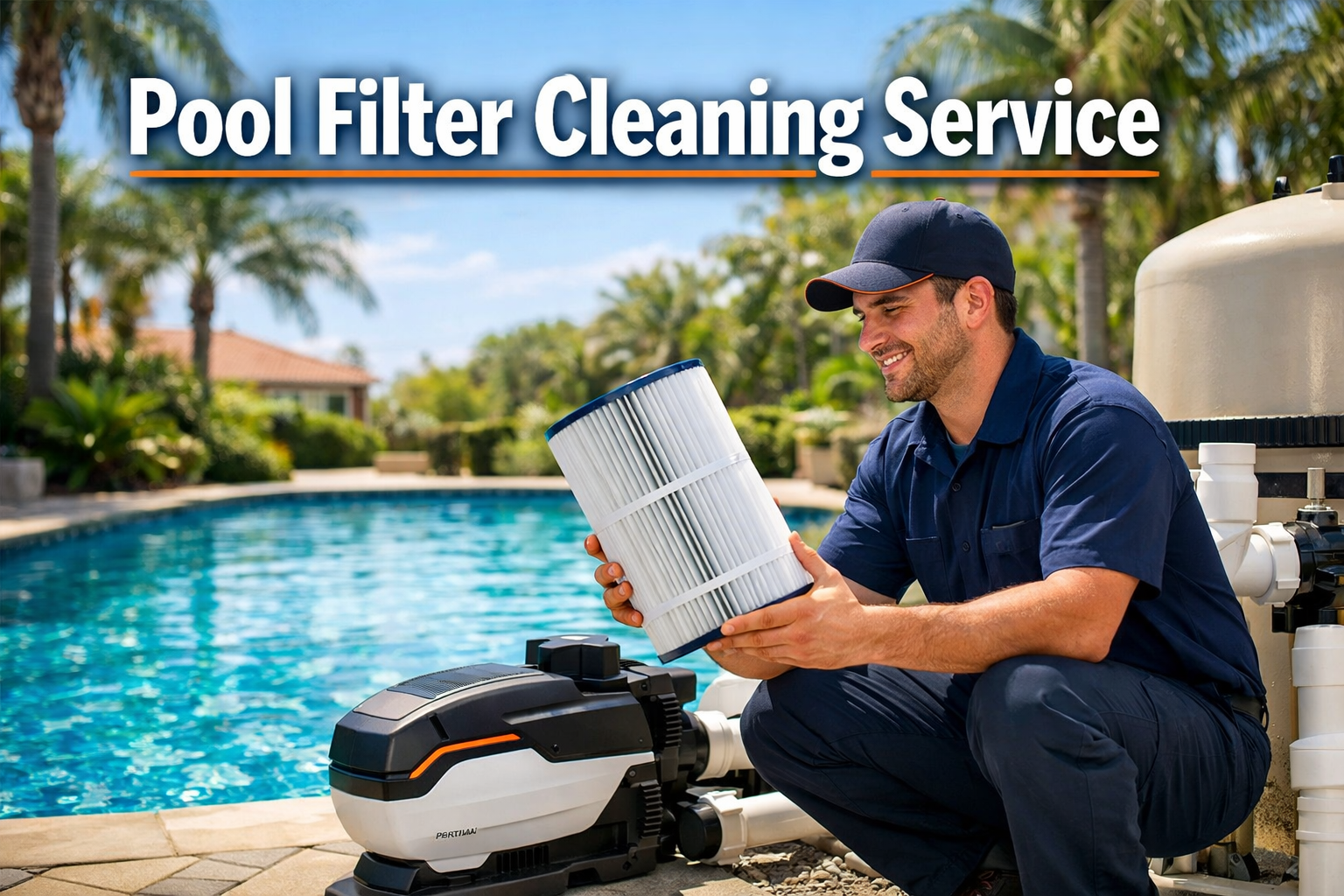
A professional pool filter cleaning service does far more than spray water on a filter. Technicians disassemble the filter housing, inspect every component, clean the filter media using the correct method for that filter type, and reassemble everything with fresh lubricant on O-rings and gaskets.
The goal is to restore the filter’s flow rate and particle-capture efficiency. A clogged or degraded filter can’t remove bacteria, algae spores, or fine debris — no matter how well-balanced the pool chemistry is. If you suspect your filtration system is failing, you may need a pool equipment repair assessment.
… (rest of content) …
Conclusion: Keep Your Filter Healthy, Keep Your Pool Clear
A pool filter is the hardest-working component in any pool system. In Corona’s hot climate and long swim season, filters load up faster than most pool owners expect. Scheduling regular pool filter cleaning service in Corona — matched to your specific filter type and usage — is the single most effective way to maintain water clarity, protect equipment, and avoid costly repairs.
For a complete list of our capabilities, visit our pool service Corona hub.
Actionable next steps:
- Check your filter pressure gauge today and compare it to your clean baseline.
- Look at your pool water — if it’s hazy despite balanced chemistry, the filter needs attention.
- Identify your filter type (cartridge, DE, or sand) and confirm when it was last professionally serviced.
- Schedule a professional pool filter cleaning service in Corona if it’s been more than 6 months since the last full service.
Don’t wait for green water or a burned-out pump motor to take action. Consistent filter maintenance is always cheaper than emergency repairs.
References
[1] Spring Fling New Robotic Pool Cleaners Making A Splash In 2026 – https://www.poolmagazine.com/features/products/spring-fling-new-robotic-pool-cleaners-making-a-splash-in-2026/
[3] Skimmers State Of Pool Service 2026 – https://poolpromag.com/skimmers-state-of-pool-service-2026/
[5] The State of Pool Service Report 2026 – https://21254957.fs1.hubspotusercontent-na1.net/hubfs/21254957/The%20State%20of%20Pool%20Service%20Report%202026.pdf
Quick Answers: Pool Filter Cleaning in Corona
How much does pool filter cleaning cost in Corona, CA? Professional filter cleaning in Corona typically costs $75 to $150 per visit, depending on filter type (DE, cartridge, or sand), pool size, and condition. Cartridge filter cleanings are usually on the lower end, while DE filter teardowns and grid replacements cost more due to labor intensity.
How often should pool filters be cleaned in Corona? In Corona’s hot Inland Empire climate, cartridge filters should be cleaned every 4 to 6 weeks during peak summer (May–September) and every 8 to 12 weeks in cooler months. DE filters need backwashing every 4 to 6 weeks and a full teardown with grid inspection at least twice yearly. Sand filters require backwashing every 2 to 4 weeks and sand replacement every 3 to 5 years.
What happens if you skip filter maintenance in Corona? Skipping filter cleaning in Corona’s dusty, high-heat environment causes rapid pressure buildup, reduced water circulation, cloudy water, and premature pump failure. A clogged filter forces your pump to work harder, increasing electricity costs and risking a $500–$1,500 pump replacement. In severe cases, poor filtration leads to algae blooms that require $200–$500 in chemical remediation.
FAQ: Pool Filter Cleaning in Corona, CA
Q: What is the difference between DE, cartridge, and sand filters?
A DE (diatomaceous earth) filter uses fine powder coating grids to trap particles as small as 2–5 microns, providing the clearest water but requiring the most maintenance. A cartridge filter uses pleated polyester fabric to capture debris (10–15 microns) and is easiest to maintain — simply remove and hose off the cartridges. A sand filter uses graded silica sand (20–40 microns) and is cleaned via backwashing, making it the lowest-maintenance option but with slightly less clarity than DE.
Q: Can I clean my pool filter myself, or should I hire a professional?
Homeowners can perform basic cartridge rinsing and sand filter backwashing. However, DE filter teardowns, grid inspections, and deep chemical soaks should be handled by a CPO-certified technician. Professionals also check O-rings, pressure gauges, and multiport valves — components that untrained homeowners often overlook. In Corona’s hard water environment, improper reassembly can cause leaks that waste hundreds of gallons.
Q: How do I know when my pool filter needs cleaning?
Watch for these warning signs: pressure gauge reading 8–10 PSI above baseline, visibly cloudy water despite proper chemical balance, reduced water flow from return jets, longer pump run times needed to maintain clarity, or debris passing through the filter back into the pool. If you notice any of these symptoms in your Corona pool, schedule a filter cleaning within 48 hours to prevent equipment strain.
Q: Does Corona’s hard water affect filter performance?
Yes. Corona’s municipal water has high calcium hardness (250–350 ppm), which causes scale buildup on filter grids and cartridges. This mineral scaling reduces filtration efficiency and shortens cartridge lifespan from 2–3 years to as little as 12–18 months without regular acid washing. Professional filter service in Corona includes calcium descaling treatments that DIY cleaning cannot match.
Q: How long does a professional filter cleaning take?
A standard cartridge filter cleaning takes 30–45 minutes. A DE filter teardown with grid inspection takes 60–90 minutes. Sand filter backwashing takes 15–20 minutes. Most Corona pool service companies schedule filter cleanings alongside regular weekly maintenance visits to minimize disruption.
Service Area & Contact Information
Pool Filter Cleaning Throughout Riverside County
Corona Brookside Pool Service provides professional pool filter cleaning and maintenance throughout Corona, CA, Eastvale, CA, Norco, CA, and Jurupa Valley, CA. Our CPO-certified technicians are experienced with all filter types — DE, cartridge, and sand — and understand the unique challenges of Inland Empire pool care.
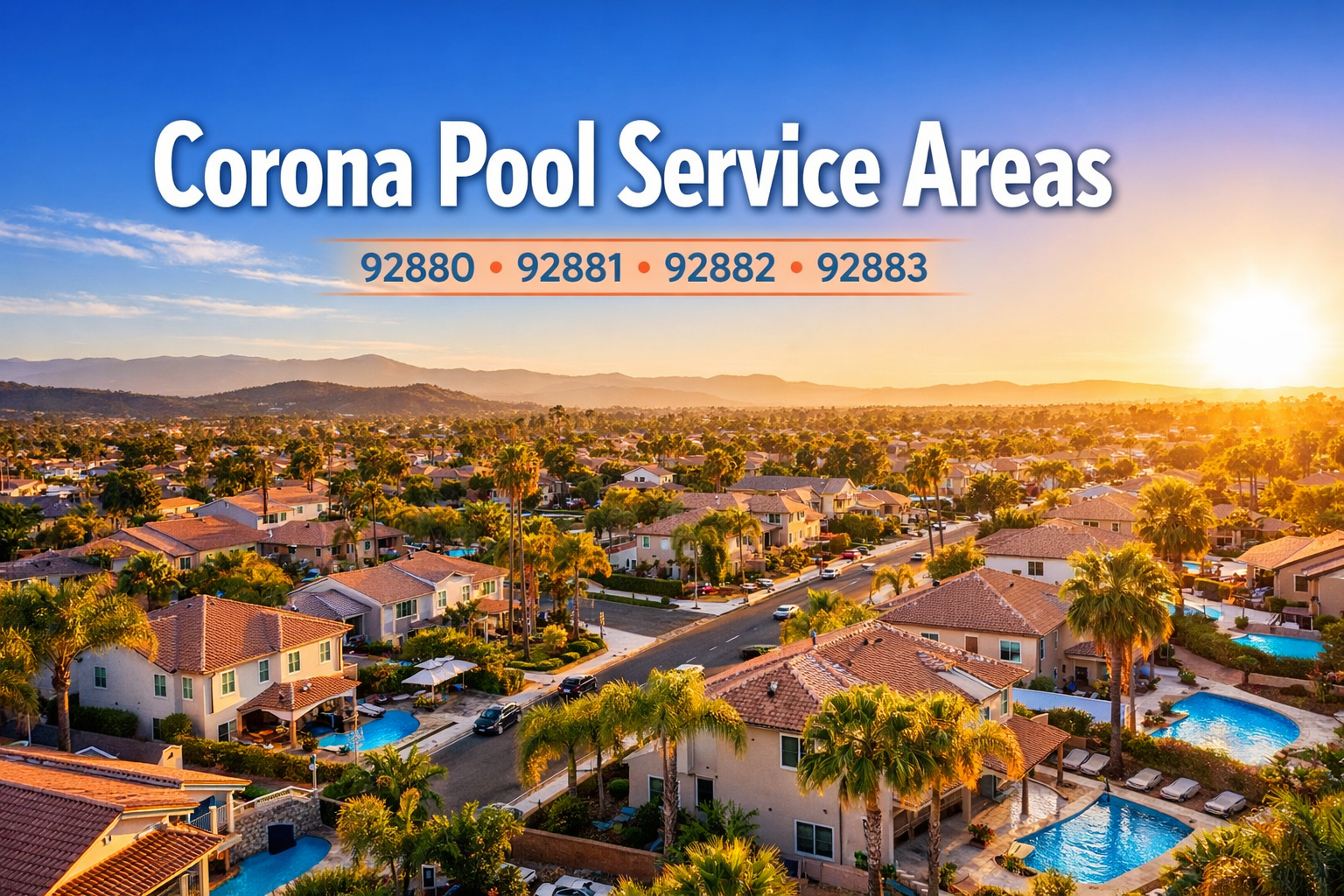
We proudly serve the following ZIP codes in Riverside County:
- 92880 — Corona / Eastvale
- 92881 — Corona (South)
- 92882 — Corona (Central)
- 92883 — Corona (Horsethief Canyon)
Whether you need a one-time deep filter cleaning, seasonal grid inspection, or ongoing filter maintenance as part of a weekly service plan, we have the tools and expertise to keep your pool water crystal clear. Our team arrives fully equipped with replacement cartridges, DE powder, O-ring kits, and professional-grade descaling solutions.
Schedule Your Filter Cleaning Today
Don’t let a clogged filter damage your pump or turn your pool cloudy. Call 951-735-3612 today to schedule professional pool filter cleaning in Corona, CA. We offer same-week appointments, transparent pricing, and a satisfaction guarantee on every service visit.
Corona Brookside Pool Service
Licensed & Insured Pool Contractors
Serving Corona, Eastvale, Norco & Jurupa Valley
Phone: 951-735-3612