Saltwater Pool Service in Corona, CA | Expert Maintenance & Conversions
Table of Contents
- Key Takeaways
- What Makes Saltwater Pool Service Different from Traditional Pool Care?
- How Does a Salt Cell Work — and When Does It Need Replacing?
- What Is the Correct Saltwater Pool Chemistry?
- How to Clean a Salt Cell (Step-by-Step)
- What Are the Most Common Saltwater Pool Problems?
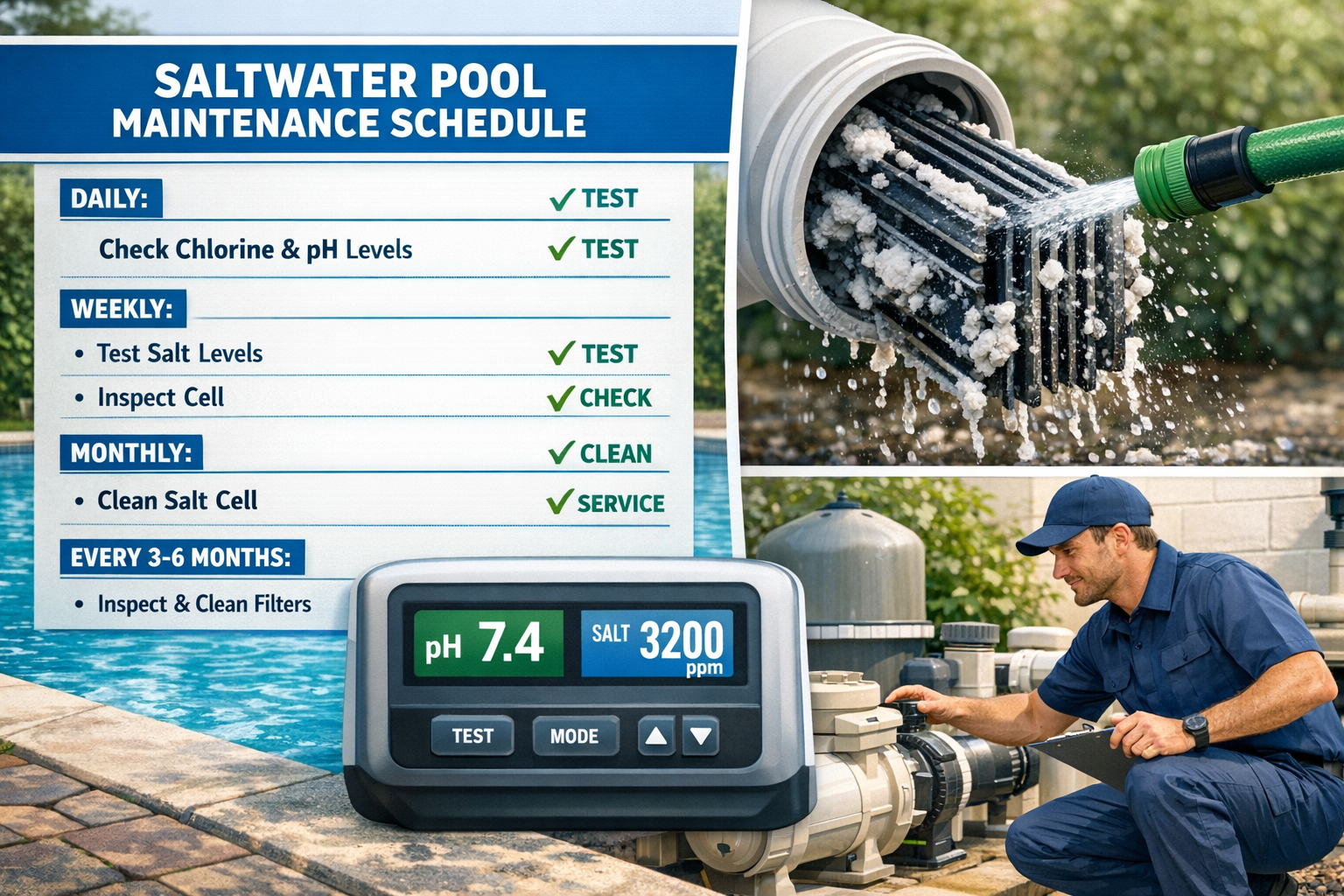
- What Does a Saltwater Pool Service Schedule Look Like?
- FAQ
- Conclusion
- References
- Quick Answers: Saltwater Pool Service in Corona
- Service Area & Contact Information
Last updated: April 12, 2026
Quick Answer: Saltwater pool service covers routine maintenance, chemical management, and salt cell care to keep a saltwater pool safe and clear. Unlike traditional chlorine pools, saltwater systems generate chlorine on-site through a salt chlorinator, which changes how owners test, balance, and service the water. Most pools need professional saltwater pool service every 4–8 weeks, plus a salt cell inspection every 3 months.
Key Takeaways
- Saltwater pools still contain chlorine — the salt cell produces it through electrolysis, so chemistry still needs regular testing.
- Salt cells typically last 3–7 years and must be cleaned of calcium scale every 3 months to stay efficient.
- Ideal salinity range is 2,700–3,400 ppm for most systems; too low and the cell stops producing chlorine.
- pH tends to drift high in saltwater pools, so more frequent pH monitoring is essential.
- Common issues include low chlorine output, cloudy water, and cell scaling — all preventable with a consistent service schedule.
- The pool service industry is consolidating in 2026, meaning homeowners have more professional options but should vet providers carefully [3].
- Stabilizer (cyanuric acid) levels matter just as much in saltwater pools as in traditional ones.
- DIY maintenance is possible for attentive owners, but annual professional inspections catch problems early.
What Makes Saltwater Pool Service Different from Traditional Pool Care?
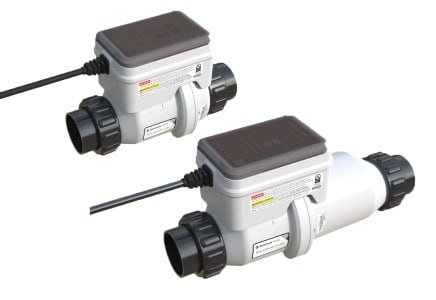
Saltwater pool service differs from standard pool maintenance primarily because of the salt chlorine generator (SCG), also called a salt cell or chlorinator. Instead of adding liquid or tablet chlorine directly, the SCG converts dissolved salt into chlorine through electrolysis. This means the chlorine source is automated, but the chemistry still needs the same careful attention.
Key chemistry differences:
| Parameter | Traditional Pool | Saltwater Pool |
|---|---|---|
| Chlorine source | Added manually | Generated by salt cell |
| Salt level needed | None | 2,700–3,400 ppm |
| pH tendency | Varies | Drifts high (toward 8.0+) |
| Stabilizer (CYA) | 30–50 ppm | 70–80 ppm recommended |
| TDS (total dissolved solids) | Lower | Higher over time |
Common mistake: Many owners assume a saltwater pool is “self-maintaining.” It isn’t. The SCG automates chlorine production, but pH, alkalinity, calcium hardness, and stabilizer still need regular testing and adjustment.
How Does a Salt Cell Work — and When Does It Need Replacing?
A salt cell is the heart of any saltwater pool system. It uses titanium plates coated with a precious metal catalyst to split salt (sodium chloride) molecules into chlorine gas, which dissolves into the water as a sanitizer. Most cells run on a percentage-output setting — typically 50–80% during the swimming season.
Signs a salt cell needs attention:
- Chlorine readings drop even when the cell appears to be running
- The control panel shows a “low salt” or “inspect cell” warning
- Visible white or gray scale on the cell plates
- Water turns cloudy despite normal salt levels
Salt cells generally last 3–7 years, depending on water chemistry, usage, and how consistently the cell is cleaned. Replacement cells typically cost $200–$600 depending on the brand and model. Choosing a reputable service provider matters here — the pool service industry is tightening its standards in 2026, with more professional operators offering cell replacement warranties [3].
What Is the Correct Saltwater Pool Chemistry?
Balanced chemistry protects the salt cell, prevents corrosion, and keeps swimmers comfortable. For saltwater pool service, target these ranges:
- Salt: 2,700–3,400 ppm (check your manufacturer’s spec)
- Free chlorine: 1–3 ppm
- pH: 7.4–7.6 (test twice weekly — it drifts up fast)
- Total alkalinity: 80–120 ppm
- Calcium hardness: 200–400 ppm
- Cyanuric acid (stabilizer): 70–80 ppm
- Phosphates: Below 200 ppb
pH management is the most common challenge. Saltwater pools naturally produce sodium hydroxide as a byproduct of electrolysis, which pushes pH upward. Left unchecked, high pH reduces chlorine effectiveness and causes scaling on the cell plates. Add muriatic acid or a pH reducer to bring it back into range — but always retest before swimming.
How to Clean a Salt Cell (Step-by-Step)
Salt cell cleaning is the most critical hands-on task in saltwater pool service. Calcium scale builds up on the titanium plates and reduces chlorine output. Clean the cell every 3 months or whenever output drops unexpectedly.
What you need: Garden hose, plastic end caps or a cell-cleaning stand, diluted muriatic acid solution (1 part acid to 10 parts water), safety gloves and goggles.
- Turn off the pool pump and switch the SCG to “off” or “service” mode.
- Remove the salt cell from the plumbing union fittings.
- Rinse with a garden hose to remove loose debris.
- Inspect the plates — light scale appears white and chalky; heavy scale looks gray and thick.
- Soak in diluted acid solution for 5–15 minutes. Do NOT use a wire brush — it damages the coating.
- Rinse thoroughly with fresh water until no acid residue remains.
- Reinstall the cell and restart the pump. Check the control panel for normal readings.
⚠️ Always add acid to water, never water to acid. Work in a ventilated area.
What Are the Most Common Saltwater Pool Problems?
Professional saltwater pool service technicians see the same issues repeatedly. Knowing them helps owners catch problems before they become expensive.
Top 5 common issues:
- Low chlorine output — Usually caused by low salt levels, a scaled cell, or a CYA level that’s too high (above 100 ppm, which blocks chlorine’s effectiveness).
- Cloudy or green water — Often follows a period of high bather load or heavy rain that dilutes salt and disrupts chemistry.
- Corrosion on metal fixtures — Saltwater is corrosive. Handrails, ladders, and light fixtures need stainless steel or salt-rated materials.
- Cell error codes — Most SCG units display codes for low salt, low flow, or high temperature. Check the manufacturer’s manual first before calling a technician.
- Calcium scaling on surfaces — High calcium hardness combined with high pH deposits scale on the pool shell and equipment.
Bonding requirements also apply to saltwater pools. Proper electrical bonding protects swimmers and equipment from stray voltage — a topic that saw updated regulatory guidance in Florida in late 2025 [1].
What Does a Saltwater Pool Service Schedule Look Like?
Consistent saltwater pool service prevents most of the problems owners face. Use this schedule as a baseline:
Weekly:
- Test pH and free chlorine
- Skim surface debris and empty skimmer baskets
- Check salt cell output percentage on the control panel
Monthly:
- Test full chemistry panel (salt, alkalinity, calcium hardness, CYA, phosphates)
- Backwash or clean the pool filter
- Inspect cell for visible scaling
Every 3 months:
- Clean the salt cell (acid wash)
- Inspect cell plates for wear or damage
- Check all O-rings and union fittings
Annually:
- Professional inspection of the SCG, cell, and control board
- Check bonding connections and equipment pad
- Evaluate cell lifespan and plan for replacement if needed
FAQ
Q: Do I still need to add chlorine to a saltwater pool?
Occasionally, yes. During algae outbreaks or after heavy rain, shocking the pool with liquid chlorine or a non-chlorine shock helps restore sanitizer levels quickly while the SCG catches up.
Q: How much salt do I add to a saltwater pool?
Most systems require roughly 50 lbs of pool-grade salt per 2,000 gallons to raise salinity by 500 ppm. Always calculate based on your current reading and pool volume before adding salt.
Q: Can I convert my existing pool to saltwater?
Yes. A licensed pool technician can install an SCG on most existing pools. The main costs are the unit itself ($500–$2,500) and any necessary plumbing or electrical work.
Q: How often should I have a professional saltwater pool service?
Every 4–8 weeks is standard for most residential pools. Pools with heavy use, lots of trees nearby, or hard water may need more frequent visits.
Q: Is saltwater safe for pool equipment?
Salt at the recommended concentration (under 3,500 ppm) is generally safe for quality equipment. However, cheap fixtures, certain stone coping, and some heaters can corrode faster. Always check manufacturer compatibility.
Q: Why does my salt cell keep scaling up quickly?
High calcium hardness (above 400 ppm) or consistently high pH accelerates scale formation. Lower both to the recommended range and the cleaning interval will extend naturally.
Q: What’s the lifespan of a salt chlorine generator?
The control board typically lasts 5–10 years. The salt cell itself lasts 3–7 years with proper cleaning. Replacing only the cell (not the full unit) is usually the more economical option.
Conclusion
Saltwater pool service is straightforward when owners understand the system. The salt cell does the heavy lifting for chlorine production, but chemistry balance, cell cleaning, and equipment checks still require consistent attention. Test pH at least twice a week, clean the cell every three months, and schedule a full professional inspection annually. Catching a scaled cell or a drifting pH early costs far less than treating a green pool or replacing a burned-out cell ahead of schedule.
Actionable next steps for 2026:
- Purchase a reliable digital test kit that reads salt, pH, chlorine, and CYA.
- Set a calendar reminder for cell cleaning every 90 days.
- Have a pool professional verify your bonding connections and SCG settings at least once a year.
- Keep a log of your chemistry readings — patterns reveal problems before they become visible.
A well-serviced saltwater pool is genuinely lower maintenance than a traditional chlorine pool, but only when the fundamentals are done consistently.
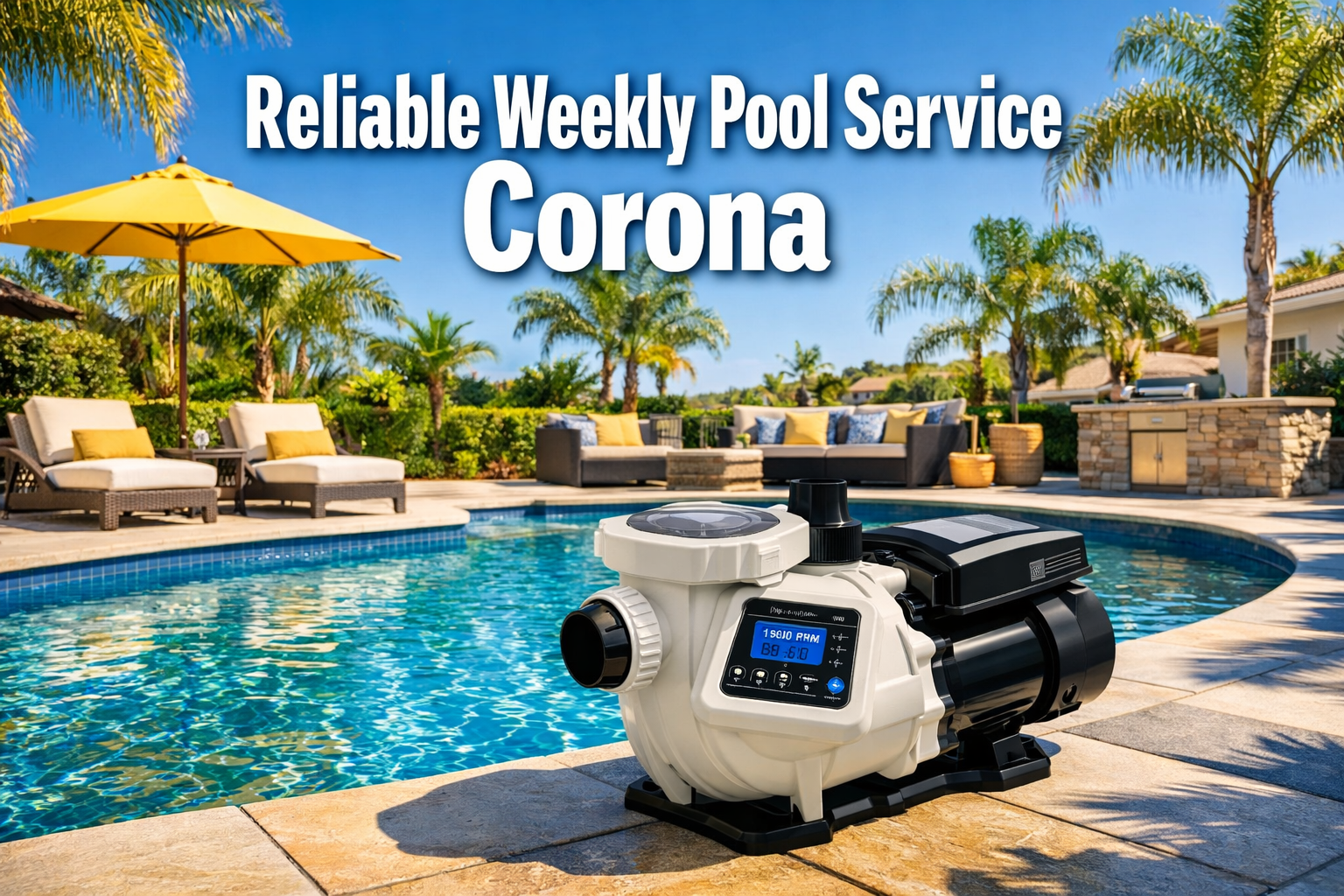
Upgrading to a variable-speed pump like the Pentair IntelliFlo3 VSF can further reduce energy costs and improve circulation for saltwater pool owners in Corona.
References
[1] FSPA Wins Big At Florida Building Commission – https://www.poolmagazine.com/news/press-releases/fspa-wins-big-at-florida-building-commission/
[2] Watch (Pool Service Industry Analysis, February 2026) – https://www.youtube.com/watch?v=TCN98Q4xCVU
[3] The State Of Pool Service In 2026: The Industry Isn’t Slowing Down, It’s Tightening Up – https://www.poolmagazine.com/pool-service-news/the-state-of-pool-service-in-2026-the-industry-isnt-slowing-down-its-tightening-up/
Quick Answers: Saltwater Pool Service in Corona
How much does saltwater pool service cost in Corona, CA? Professional saltwater pool maintenance in Corona typically costs $140 to $220 per month, slightly higher than traditional chlorine pools due to salt cell monitoring and calibration. The premium covers salt level testing, cell inspection, pH balancing (salt systems naturally raise pH), and periodic acid washing of the cell to remove calcium buildup.
How often should salt cells be inspected in Corona? In Corona’s hot Inland Empire climate, salt cells should be visually inspected every 4 to 6 weeks and professionally cleaned every 3 to 4 months. The intense heat and high calcium hardness in Corona’s municipal water (250–350 ppm) accelerate scale buildup on cell plates, reducing chlorine production efficiency by 30–50% if neglected.
How does Corona’s heat affect salt pool levels? Corona’s summer temperatures regularly exceed 95°F, causing increased evaporation that concentrates salt levels faster than in cooler climates. Heavy splashing and backwashing also dilute salt, creating fluctuations that require more frequent monitoring. Most Corona saltwater pools need salt added 2–3 times per year, compared to 1–2 times in coastal Southern California.
Service Area & Contact Information
Saltwater Pool Experts Serving Riverside County
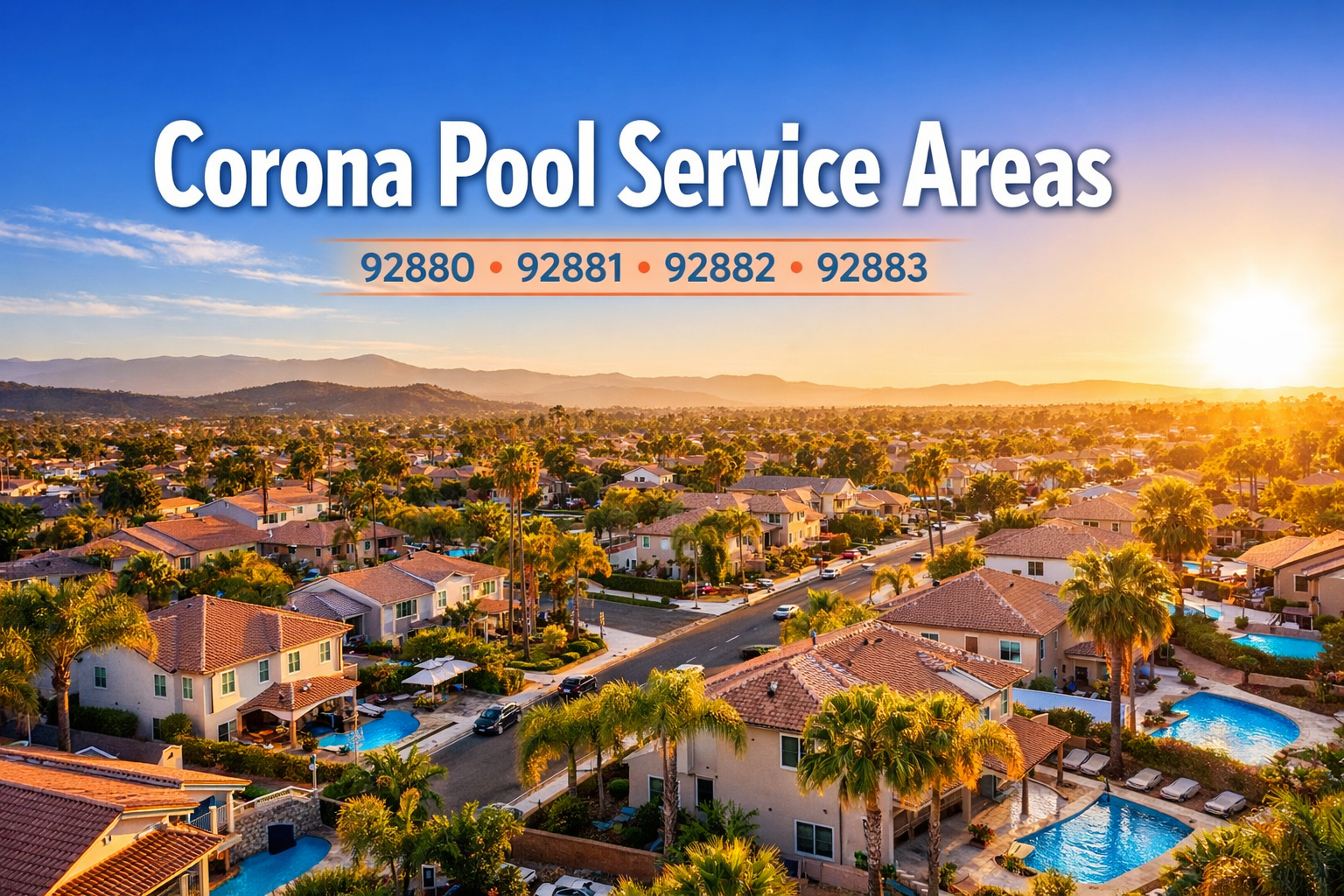
Corona Brookside Pool Service specializes in saltwater pool maintenance, salt cell cleaning, and chlorine generator repairs throughout Corona, CA, Eastvale, CA, Norco, CA, and Jurupa Valley, CA. Our CPO-certified technicians understand the unique challenges of Inland Empire saltwater pool care — from hard water scaling to UV degradation of salt cell components.
We proudly serve the following ZIP codes in Riverside County:
- 92880 — Corona / Eastvale
- 92881 — Corona (South)
- 92882 — Corona (Central)
- 92883 — Corona (Horsethief Canyon)
Whether you need a salt cell inspection, system conversion consultation, or ongoing weekly saltwater pool service, we have the expertise and equipment to keep your pool water silky, clear, and perfectly balanced. Our team carries replacement salt cells, pH controllers, and professional-grade calcium descaling solutions on every service visit.
Schedule Your Saltwater Pool Service Today
Ready to switch to saltwater or need expert maintenance for your existing system? Call 951-735-3612 today for a free consultation and service quote. We offer same-week appointments, transparent pricing, and a satisfaction guarantee on every saltwater pool service visit in Corona, CA.
Corona Brookside Pool Service
Licensed & Insured Pool Contractors
Serving Corona, Eastvale, Norco & Jurupa Valley
Phone: 951-735-3612