Last updated: April 11, 2026
Quick Answer: Weekly pool cleaning in Corona, CA, involves a trained technician visiting your property once a week to skim the surface, vacuum the floor, brush the walls and tile line, empty skimmer and pump baskets, and test and balance the water chemistry. For most homeowners in the Inland Empire’s hot, dusty climate, weekly service is the minimum needed to keep a pool safe, clear, and equipment-ready year-round.
Key Takeaways
- Weekly service covers six core tasks: skimming, vacuuming, brushing, basket emptying, chemistry testing, and chemical treatment.
- Corona’s warm climate and high pollen/dust load mean pools can turn green or cloudy within days without regular maintenance.
- A standard weekly plan typically costs $140–$200 per month for a residential pool (estimate based on regional service provider pricing; costs vary by pool size and service scope).
- Balanced water chemistry protects swimmers from skin and eye irritation and extends the life of pool equipment.
- Skipping even one week during summer can trigger algae growth, leading to costly shock treatments or acid washes.
- Most weekly plans include chemicals in the monthly rate, but always confirm this before signing a service agreement.
- Hiring a licensed pool service contractor in California requires verifying their C-53 Swimming Pool Contractor license.
What Does Weekly Pool Cleaning in Corona Actually Include?
A proper weekly pool cleaning visit covers far more than just netting out leaves. Every visit should address the water surface, the pool floor and walls, the filtration hardware, and the chemical balance.
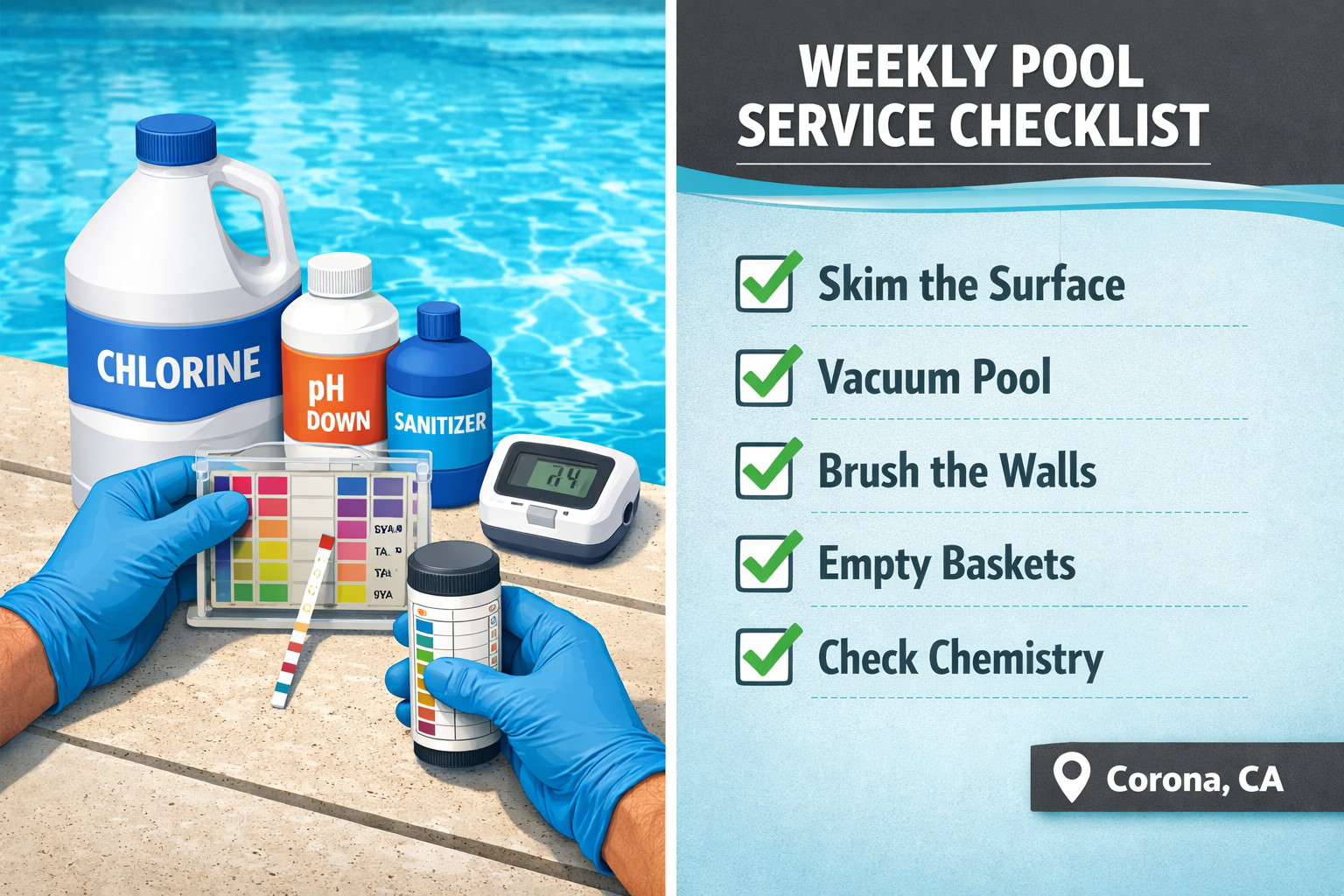
Here is what a complete weekly service visit looks like:
| Task | What It Does | Time Required |
|---|---|---|
| Surface skimming | Removes leaves, insects, and debris before they sink | 5–10 min |
| Pool vacuuming | Clears settled dirt and algae from the floor | 10–20 min |
| Wall and tile brushing | Prevents algae and calcium buildup on surfaces | 5–10 min |
| Basket emptying | Clears skimmer and pump baskets to maintain flow | 5 min |
| Water chemistry testing | Checks pH, chlorine, alkalinity, and stabilizer levels | 5–10 min |
| Chemical treatment | Adds chlorine, pH adjusters, or algaecide as needed | 5 min |
“A pool that looks clean on the surface can still have dangerously unbalanced chemistry. Weekly testing is non-negotiable.”
Why Corona Homeowners Need Weekly Pool Service More Than Most
Corona’s climate creates specific challenges for pool owners. Summer temperatures regularly exceed 100°F, accelerating chlorine burn-off and promoting algae growth. Add the region’s dry, dusty winds and nearby agricultural activity, and pools accumulate debris and contaminants more quickly than those in cooler coastal cities.
Corona’s city environmental services also encourage residents to manage pool backwash and drainage responsibly to protect local waterways [3]. A professional weekly service provider will handle this correctly, whereas DIY owners sometimes inadvertently violate local discharge guidelines.
Choose weekly service if:
- Your pool is used frequently during summer (3+ times per week).
- Your yard has trees, shrubs, or grass near the pool.
- You travel or have a busy schedule that makes consistent DIY maintenance difficult.
- Your pool has a history of algae problems.
The Six Core Tasks of Weekly Pool Cleaning in Corona
1. Skimming the Surface
Skimming removes floating debris before it sinks and decomposes. Decomposing organic matter consumes chlorine rapidly and can stain pool surfaces. A technician uses a flat or bag skimmer net attached to a telescoping pole to clear the entire water surface.
2. Vacuuming the Pool Floor
Manual or automatic vacuuming removes settled dirt, sand, and early-stage algae from the pool floor. In Corona, fine desert dust is a consistent problem. Many technicians use a manual vacuum head connected to the filtration system, though some companies now deploy robotic pool cleaners as part of their service. New robotic models introduced in 2026 offer improved navigation and debris capacity [2], making them increasingly practical for weekly residential use.
3. Brushing Walls, Steps, and the Tile Line
Brushing disrupts biofilm and algae before they establish a foothold. The tile line at the waterline is especially prone to calcium scale buildup in Corona’s hard water. A stiff nylon brush handles plaster walls; a softer brush protects tile and vinyl surfaces.
4. Emptying Skimmer and Pump Baskets
Clogged baskets restrict water flow, which strains the pump motor and reduces filtration efficiency. A technician removes, empties, and reinstates both the skimmer basket (in the pool wall) and the pump basket (in the equipment pad) every visit.
5. Testing and Balancing Water Chemistry
This is the most technically important step. A technician tests for:
- pH (ideal range: 7.4–7.6)
- Free chlorine (ideal range: 1–3 ppm)
- Total alkalinity (ideal range: 80–120 ppm)
- Cyanuric acid/stabilizer (ideal range: 30–50 ppm)
- Calcium hardness (ideal range: 200–400 ppm)
Out-of-range chemistry causes swimmer discomfort, corrodes equipment, and clouds the water.
6. Adding Chemicals as Needed
After testing, the technician adds the appropriate chemicals to bring all parameters into range. Most weekly plans include the cost of standard chemicals (chlorine tablets, liquid chlorine, pH adjusters) in the monthly fee. Specialty treatments like algaecide, clarifier, or phosphate remover may be billed separately.
What Is Typically Included in a Weekly Pool Cleaning Plan?
Most pool service companies in the Corona area offer tiered weekly plans. Here is a general breakdown:
Standard Weekly Plan (most common):
- All six core tasks listed above
- Basic chemicals included
- Filter rinse (monthly or as needed)
- Written or app-based service report after each visit
Premium Weekly Plan:
- Everything in standard
- Filter cleaning (cartridge or DE) is included quarterly
- Equipment inspection each visit
- Priority scheduling and same-week problem response
What is usually NOT included:
- Filter element replacement
- Equipment repairs
- Green pool or algae remediation (billed separately)
- Drain and acid wash services
Always ask for a written service agreement that specifies exactly what is and is not covered before committing to a provider.
How to Choose a Weekly Pool Cleaning Service in Corona
The California Contractors State License Board (CSLB) requires pool service contractors who also perform repairs to hold a C-53 Swimming Pool Contractor license. For maintenance-only service, a business license is the minimum, but hiring a C-53 licensed company gives you recourse if problems arise.
Questions to ask before hiring:
- Are you licensed and insured in California?
- Is chemical cost included in the monthly rate?
- Do you provide a written report after each visit?
- What is your process for green pool remediation?
- How do you handle equipment issues discovered during a visit?
Frequently Asked Questions
How much does weekly pool cleaning in Corona cost?
Most homeowners pay between $100 and $200 per month for weekly service, depending on pool size, service scope, and whether chemicals are included. Larger pools or pools with complex features like waterfalls or spas typically cost more.
Can I skip weekly service in winter?
In Corona, pools are often used year-round due to the mild climate. Even if the pool is not in use, algae and debris accumulation continue. Bi-weekly service in winter may be acceptable for some pools, but weekly is safer.
What happens if I miss a week?
In summer, a single missed week can allow algae to bloom, especially if chlorine levels drop. Remediation (shocking, brushing, filtering) can cost $50–$150 or more on top of the regular service fee.
Do weekly pool cleaners also fix equipment?
Most maintenance companies will flag equipment issues but charge separately for repairs. Confirm this upfront. A C-53 licensed contractor can legally perform repairs; a maintenance-only company cannot.
How long does a weekly pool service visit take?
A standard visit for a residential pool takes 30–45 minutes. Pools with heavy debris loads or chemistry issues may take longer.
Is robotic pool cleaning replacing manual weekly service?
Robotic cleaners handle vacuuming well, but they do not test chemistry, empty baskets, or brush tile lines. New 2026 robotic models have improved significantly [2], but they supplement rather than replace a full weekly service visit.
What should I do between weekly visits?
Run the pump for 8–12 hours daily, check the skimmer basket every few days during high-debris periods, and avoid adding tap water without notifying your service technician, as it can affect chemical balance.
Conclusion
Weekly pool cleaning in Corona is not a luxury for busy homeowners; it is the baseline required to keep a pool safe, clear, and cost-effective to maintain. Corona’s heat, dust, and hard water create conditions that cause pools to deteriorate quickly without consistent attention. A proper weekly plan includes skimming, vacuuming, brushing, basket emptying, chemistry testing, and chemical treatment, and it protects both swimmers and equipment.
Actionable next steps:
- Request quotes from at least three licensed pool service companies in Corona.
- Ask each provider for a written service agreement that lists every included task.
- Confirm whether chemicals are bundled into the monthly rate.
- Verify the company’s C-53 license or business license through the CSLB website.
- Schedule a first visit and note your pool’s condition before and after to establish a baseline.
A clean, balanced pool does not happen by accident. Weekly professional service is the most reliable way to protect your investment and enjoy your pool without the stress of DIY maintenance.
References
[1] Watch – https://www.youtube.com/watch?v=TCN98Q4xCVU
[2] poolmagazine – https://www.poolmagazine.com/features/products/spring-fling-new-robotic-pool-cleaners-making-a-splash-in-2026/amp/
[3] Residential – https://www.coronaca.gov/departments/public-works/environmental-services/residential